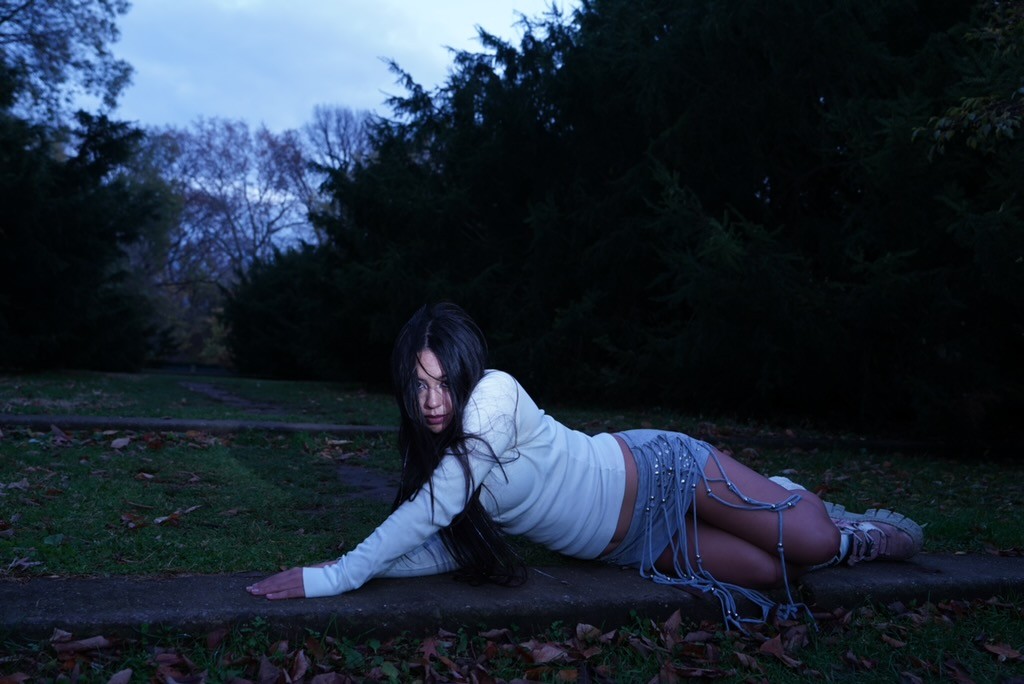
Inside RØRZY's Cinematic Glitch-Pop Universe
Inside RØRZY's Cinematic Glitch-Pop Universe
Solomon Smith
Music
What's going on everybody? I'm Solomon Smith, of the Violet WRKSHP. I serve on both the Outreach Committee and Interview Committee, and today I am here with RØRZY.
My first question for you is what inspired you to get into music?
Yeah, so I grew up in a pretty creative family. I would say like I always had like my mom was on the piano ever since I can remember. And I had an aunt who was also playing guitar and making music. They kind of had a small band together.
My dad does film stuff. So it was just kind of like all the people in my family kind of did their own creative thing.
And so it kind of got me inspired to play piano too and dabble in little places in there. Also I would say my mom's diverse music tastes.
I grew up listening to like FK Twigs, Tori Amos, Bjork.
Yeah.
And just like a bunch of different experimental artists on her side. And then I had like, you know, I listened to Wonderwall.
I'm gonna have some Radiohead from my dad. And so it was just a very diverse swamp of music that I kind of got to digest and collect things from.
But I think how I fully decided I wanted to be in music wasn't until I would say I was around like 10 to 13.
When I actually got my hands into production. Before that, I would say I was kind of like I was put into guitar lessons.
And when I was very young, like six.
And then I kind of got out of it for a while, then got back in. I was in a little band called Intune Music through the guitar lessons.
Like it was kind of just like a collective group.
Oh, it's like something that formed through that guitar.
Yeah, yeah, yeah. It was like the teacher would kind of pick students and she's like, oh, you know what, we have this band, you should join.
And so it's just a bunch of kids playing like Red Hot Chili Peppers.
Oh, that's cool.
Yeah, yeah. A bunch of like old, like not old, but like older rock songs that were fun, like Seven Nation Army, you know.
It was a great time. But there was this aspect of control that I didn't have over my musicianship that I loved performing.
We did a bunch of performances and had a bunch of exposure and like it was great to have that community.
But I think for me, it was kind of just like I was restrained by the fact that it was only covers. And then when I was creating music, I liked making it on guitar and piano.
But I felt like there was like this limit to my creativity that I just didn't know why I wasn't like messing with it.
But when I got into production through GarageBand, I was like, this is exactly, this is what I'm trying to do.
Like I can fully control like the synths and the energy and the vibe of who I want to be.
But it was just so instrumentally rich and a way of like, I didn't need to know full theory and I didn't need to be this certain person, like I didn't have to conform to the certain way in order to build something that I liked.
It was all just trusting my ear. And so yeah, from there I got into Logic because it was an easy transition and they're also by Apple.
So it's like, you know, and I just like from there started making tons of music.
That makes sense. You spoke about doing guitar lessons and learning different instruments at age six. And then you spoke about moving over to GarageBand and Logic. Did that move click instantly for you because of your prior music knowledge or did it take some time to fully develop those skills on those platforms ?
I actually think it did click instantly.
Really?
Yeah, I think it was because on GarageBand, it was kind of like the MIDI, I just used a little MIDI and I would change the sound. So it was like playing piano.
Right, right.
And then like recording it kind of just came naturally. I think in the beginning, I did watch YouTube videos of like, okay, like how to produce a song.
Like there was a bunch of like K-pop tutorials.
You know, we were talking about it before the interview, I really love a dirty bass.
That’s right, I remember you mentioned that.
And so my whole goal into starting production was like, how do I make that beat? How do I get that down?
And like, it was just me layering things for a long time until finally I was like, oh my God, I can like side chain.
And oh my God, I can add this kick and then put this synth on top and it sounds way more rich and like an experience.
So I think, I think, yeah, it just came from me like completely replicating like tutorials until I realized like, okay, now I know what I'm doing and I'm going to make my own songs at the same time.
That's dope. And that was at the age of what? Like that was in middle school?
Yeah, I would say like late, like, around like eighth grade.
I mean, I use logic now, but I think I made my first like actual fully fledged song using music production in eighth grade. And then like I had this like full shift, I think in ninth grade when I did this song on Christmas Eve. Like I made a song called Pray For Me and I was like, Okay. Okay this is the direction I'm trying to go. And then from here on out, I'm just going to trust what I'm doing.
And I know you said you started off just producing, but when was that transition to you actually like singing and doing more vocal work?
Oh, like when did I fully shift?
Yeah.
Um, I would say I think I was always trying to find an excuse to shift and find a way in which I can control how I make music. Cause I mean, I really loved, don't get me wrong, I love playing guitar and I love playing piano. And there is almost like a spiritual feeling that comes with having an organic instrument and you're just sitting there and it's almost like you're talking back and forth, like therapeutic. It's just, it's there in front of your face and it's like, it's physical where it's like, you know, digital, it's more in the mind.
It's not like right in your facility. You're trying to figure everything out.
There's, it's like, it's also a spiritual experience, but it's like in a different way.
So less, less intimate, but also very intimate. So it was kind of like immediately, I guess, like when I decided to switch to using Garageband, which maybe I would say I need to like to gather that.
But I would say, I think I fully made that switch in like eighth grade.
Eighth grade.
Yeah. I would say fully eighth grade. I was starting to make some little synth melodies and I was like, okay, this is sticking with me. I really love how this is working. I love how I can modulate things and like, just like an open playing field.
It was just like a whole coloring box of things. And then I think from there, ever since I went to that, I couldn't stop.
That's dope.
And did it click instantly for you once you started doing vocal work and started singing and doing different things on those beats that you were making?
Yeah. I think I knew then that that's like fully what I wanted to do.
And there were times where I was trying to weirdly like escape from it because I come from a family that is so creative. And like, I wouldn't say they failed, but they definitely have expectations because they kind of are like, all right, you carry the ship.
You got all of these like aspirations and wants. And me being the first born, I guess, of the entire family was like, I'm the oldest. There's a bunch of kids.
And they're all like, okay Aurora, you're paving the way, you know?
I didn't like that.
So I was trying to, I guess not rebel, but I was trying to find my own way through, like trying out school at the same time, getting good grades. But then I was also like, okay, you think about music all the time, you're producing stuff, and you're listening to things, and you're ingesting things, and you're performing all the time. It's like, that's what you want to do.
Yeah.
Like, you can't hide from what you are. So, I think, it's like, thank God I did that.
I mean, but it was your love for music that, even when you were trying to rebel, you couldn't because it was just natural for you.
I mean, I am someone who's so like, if I love a song, I will listen to that song over and over on repeat. And I get like, chills when I first hear it.
Like, oh my God, my favorite song, I can remember where I was, what the experience is, how it made me feel, you know, that's just what I love about music is the visual storytelling of it all.
No, definitely. When you have a favorite song, there’s a memory attached to that.
So you remember the season of it, the original feelings it might have been.
Yes.
It's a dope feeling.
It's actually magical.
It's crazy how music can do that for you and make you feel.
Totally.
And now, how often do you get those feelings when making your own music and your own songs?
I think for my music specifically, I am a very visual person as I am a music creator. Like, I feel like those go hand in hand for me.
I'm a storyteller. I like to take in a lot of stories. And when I listen to music, yes, it gives me this visceral feeling.
And so my goal with my music is to also portray this visceral feeling in any way that I can.
I think I'm very much a maximalist with the way that I produce and create.
Right.
And so I feel like at the same time, I also want to create, not holding myself to this world that I want to create, but I always make sure, specifically like with this new EP that I'm creating.
Yeah.
It's kind of like liminal alien cinematic space.
Where it's like, you're going through this story of like dealing with anxiety and like feeling not enough, but then feeling empowered. It's kind of like coming to yourself, like no, coming to awareness of who you are, you know?
And it's kind of centered on like the time I was in Berlin and kind of going through like just emotions.
Like I'm growing up and like experiencing, also very inspired by like the nightlife scene and how that base and that experience just made me feel so euphoric and so present. And so with that, my music, it's kind of like cinematic yearning glitch pop kind of.
Yeah, and I was gonna ask you a similar question, but you basically answer it. What starts the creative process of when you want to make a song. But what I'm hearing from you is, it's based on emotions and just what you're going through.
Yeah, when like within life, like a lot of my songs have been made at like 5am.
Wow.
Like I'll come back from the club or like I'll be, a lot of the time I have to be very loopy almost because it's like, I'm an overthinker.
So like, I take it in a way of like, I'm not the one steering the bus. Like you just got to trust like the instinct.
It's like, if I'm thinking it's not going to be good, but if I'm like letting go and just creating, like I actually couldn't fully tell you how I make the songs. I don't know if that's weird to say, but it's kind of like, I’ll have this melody just stuck in my head at some points.
And then I'll be like, no, I need to make this like chorus melody. And so I'll just be like a crazy person at 5am.
I feel bad for my friends. [laughs]
What's going on everybody? I'm Solomon Smith, of the Violet WRKSHP. I serve on both the Outreach Committee and Interview Committee, and today I am here with RØRZY.
My first question for you is what inspired you to get into music?
Yeah, so I grew up in a pretty creative family. I would say like I always had like my mom was on the piano ever since I can remember. And I had an aunt who was also playing guitar and making music. They kind of had a small band together.
My dad does film stuff. So it was just kind of like all the people in my family kind of did their own creative thing.
And so it kind of got me inspired to play piano too and dabble in little places in there. Also I would say my mom's diverse music tastes.
I grew up listening to like FK Twigs, Tori Amos, Bjork.
Yeah.
And just like a bunch of different experimental artists on her side. And then I had like, you know, I listened to Wonderwall.
I'm gonna have some Radiohead from my dad. And so it was just a very diverse swamp of music that I kind of got to digest and collect things from.
But I think how I fully decided I wanted to be in music wasn't until I would say I was around like 10 to 13.
When I actually got my hands into production. Before that, I would say I was kind of like I was put into guitar lessons.
And when I was very young, like six.
And then I kind of got out of it for a while, then got back in. I was in a little band called Intune Music through the guitar lessons.
Like it was kind of just like a collective group.
Oh, it's like something that formed through that guitar.
Yeah, yeah, yeah. It was like the teacher would kind of pick students and she's like, oh, you know what, we have this band, you should join.
And so it's just a bunch of kids playing like Red Hot Chili Peppers.
Oh, that's cool.
Yeah, yeah. A bunch of like old, like not old, but like older rock songs that were fun, like Seven Nation Army, you know.
It was a great time. But there was this aspect of control that I didn't have over my musicianship that I loved performing.
We did a bunch of performances and had a bunch of exposure and like it was great to have that community.
But I think for me, it was kind of just like I was restrained by the fact that it was only covers. And then when I was creating music, I liked making it on guitar and piano.
But I felt like there was like this limit to my creativity that I just didn't know why I wasn't like messing with it.
But when I got into production through GarageBand, I was like, this is exactly, this is what I'm trying to do.
Like I can fully control like the synths and the energy and the vibe of who I want to be.
But it was just so instrumentally rich and a way of like, I didn't need to know full theory and I didn't need to be this certain person, like I didn't have to conform to the certain way in order to build something that I liked.
It was all just trusting my ear. And so yeah, from there I got into Logic because it was an easy transition and they're also by Apple.
So it's like, you know, and I just like from there started making tons of music.
That makes sense. You spoke about doing guitar lessons and learning different instruments at age six. And then you spoke about moving over to GarageBand and Logic. Did that move click instantly for you because of your prior music knowledge or did it take some time to fully develop those skills on those platforms ?
I actually think it did click instantly.
Really?
Yeah, I think it was because on GarageBand, it was kind of like the MIDI, I just used a little MIDI and I would change the sound. So it was like playing piano.
Right, right.
And then like recording it kind of just came naturally. I think in the beginning, I did watch YouTube videos of like, okay, like how to produce a song.
Like there was a bunch of like K-pop tutorials.
You know, we were talking about it before the interview, I really love a dirty bass.
That’s right, I remember you mentioned that.
And so my whole goal into starting production was like, how do I make that beat? How do I get that down?
And like, it was just me layering things for a long time until finally I was like, oh my God, I can like side chain.
And oh my God, I can add this kick and then put this synth on top and it sounds way more rich and like an experience.
So I think, I think, yeah, it just came from me like completely replicating like tutorials until I realized like, okay, now I know what I'm doing and I'm going to make my own songs at the same time.
That's dope. And that was at the age of what? Like that was in middle school?
Yeah, I would say like late, like, around like eighth grade.
I mean, I use logic now, but I think I made my first like actual fully fledged song using music production in eighth grade. And then like I had this like full shift, I think in ninth grade when I did this song on Christmas Eve. Like I made a song called Pray For Me and I was like, Okay. Okay this is the direction I'm trying to go. And then from here on out, I'm just going to trust what I'm doing.
And I know you said you started off just producing, but when was that transition to you actually like singing and doing more vocal work?
Oh, like when did I fully shift?
Yeah.
Um, I would say I think I was always trying to find an excuse to shift and find a way in which I can control how I make music. Cause I mean, I really loved, don't get me wrong, I love playing guitar and I love playing piano. And there is almost like a spiritual feeling that comes with having an organic instrument and you're just sitting there and it's almost like you're talking back and forth, like therapeutic. It's just, it's there in front of your face and it's like, it's physical where it's like, you know, digital, it's more in the mind.
It's not like right in your facility. You're trying to figure everything out.
There's, it's like, it's also a spiritual experience, but it's like in a different way.
So less, less intimate, but also very intimate. So it was kind of like immediately, I guess, like when I decided to switch to using Garageband, which maybe I would say I need to like to gather that.
But I would say, I think I fully made that switch in like eighth grade.
Eighth grade.
Yeah. I would say fully eighth grade. I was starting to make some little synth melodies and I was like, okay, this is sticking with me. I really love how this is working. I love how I can modulate things and like, just like an open playing field.
It was just like a whole coloring box of things. And then I think from there, ever since I went to that, I couldn't stop.
That's dope.
And did it click instantly for you once you started doing vocal work and started singing and doing different things on those beats that you were making?
Yeah. I think I knew then that that's like fully what I wanted to do.
And there were times where I was trying to weirdly like escape from it because I come from a family that is so creative. And like, I wouldn't say they failed, but they definitely have expectations because they kind of are like, all right, you carry the ship.
You got all of these like aspirations and wants. And me being the first born, I guess, of the entire family was like, I'm the oldest. There's a bunch of kids.
And they're all like, okay Aurora, you're paving the way, you know?
I didn't like that.
So I was trying to, I guess not rebel, but I was trying to find my own way through, like trying out school at the same time, getting good grades. But then I was also like, okay, you think about music all the time, you're producing stuff, and you're listening to things, and you're ingesting things, and you're performing all the time. It's like, that's what you want to do.
Yeah.
Like, you can't hide from what you are. So, I think, it's like, thank God I did that.
I mean, but it was your love for music that, even when you were trying to rebel, you couldn't because it was just natural for you.
I mean, I am someone who's so like, if I love a song, I will listen to that song over and over on repeat. And I get like, chills when I first hear it.
Like, oh my God, my favorite song, I can remember where I was, what the experience is, how it made me feel, you know, that's just what I love about music is the visual storytelling of it all.
No, definitely. When you have a favorite song, there’s a memory attached to that.
So you remember the season of it, the original feelings it might have been.
Yes.
It's a dope feeling.
It's actually magical.
It's crazy how music can do that for you and make you feel.
Totally.
And now, how often do you get those feelings when making your own music and your own songs?
I think for my music specifically, I am a very visual person as I am a music creator. Like, I feel like those go hand in hand for me.
I'm a storyteller. I like to take in a lot of stories. And when I listen to music, yes, it gives me this visceral feeling.
And so my goal with my music is to also portray this visceral feeling in any way that I can.
I think I'm very much a maximalist with the way that I produce and create.
Right.
And so I feel like at the same time, I also want to create, not holding myself to this world that I want to create, but I always make sure, specifically like with this new EP that I'm creating.
Yeah.
It's kind of like liminal alien cinematic space.
Where it's like, you're going through this story of like dealing with anxiety and like feeling not enough, but then feeling empowered. It's kind of like coming to yourself, like no, coming to awareness of who you are, you know?
And it's kind of centered on like the time I was in Berlin and kind of going through like just emotions.
Like I'm growing up and like experiencing, also very inspired by like the nightlife scene and how that base and that experience just made me feel so euphoric and so present. And so with that, my music, it's kind of like cinematic yearning glitch pop kind of.
Yeah, and I was gonna ask you a similar question, but you basically answer it. What starts the creative process of when you want to make a song. But what I'm hearing from you is, it's based on emotions and just what you're going through.
Yeah, when like within life, like a lot of my songs have been made at like 5am.
Wow.
Like I'll come back from the club or like I'll be, a lot of the time I have to be very loopy almost because it's like, I'm an overthinker.
So like, I take it in a way of like, I'm not the one steering the bus. Like you just got to trust like the instinct.
It's like, if I'm thinking it's not going to be good, but if I'm like letting go and just creating, like I actually couldn't fully tell you how I make the songs. I don't know if that's weird to say, but it's kind of like, I’ll have this melody just stuck in my head at some points.
And then I'll be like, no, I need to make this like chorus melody. And so I'll just be like a crazy person at 5am.
I feel bad for my friends. [laughs]