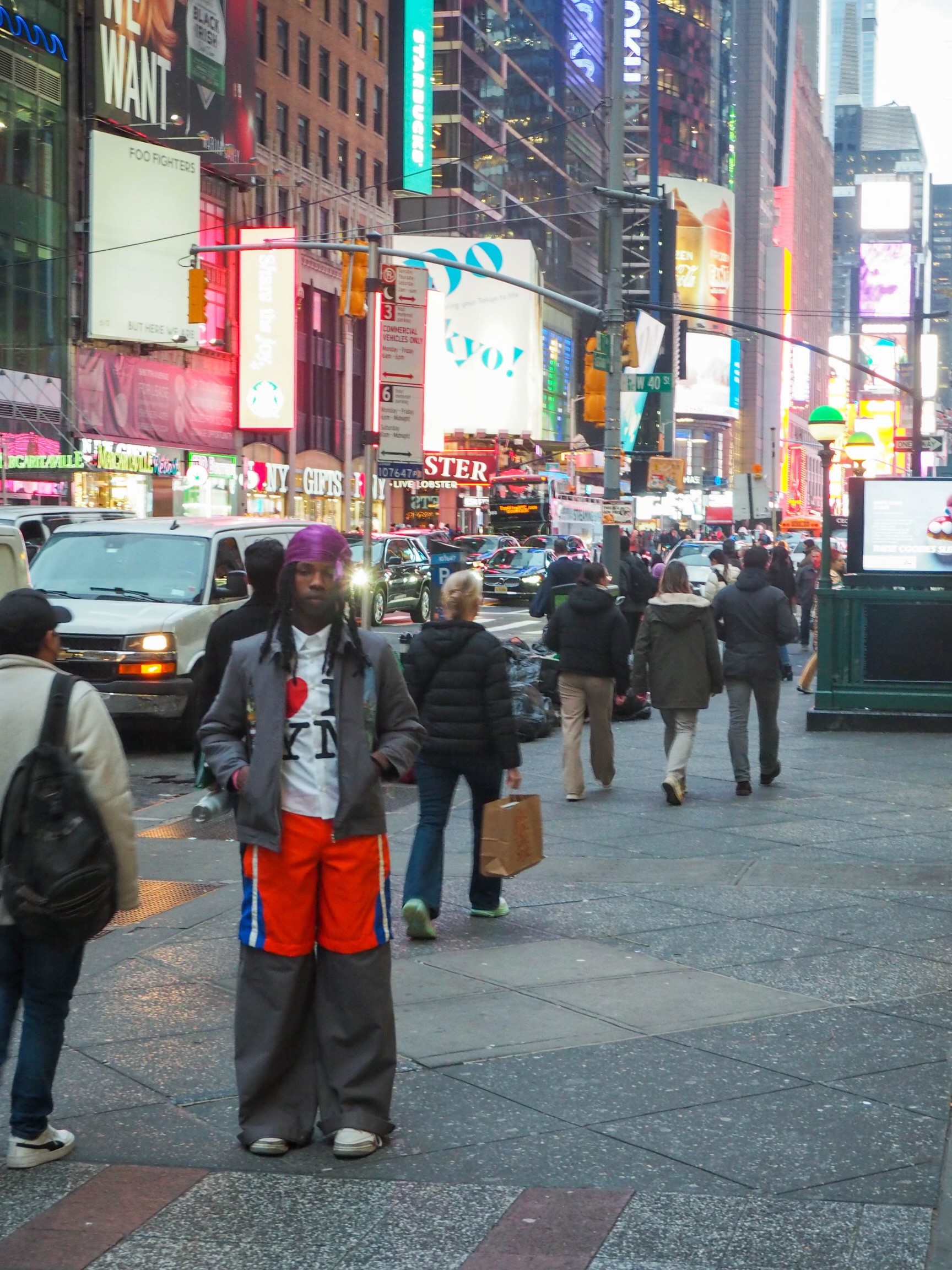
SeiaVolt Is Doing Rap His Own Way
SeiaVolt Is Doing Rap His Own Way
Solomon Smith
Music
Solomon Smith: What's going on everybody? I'm Solomon Smith, of the Violet WRKSHP. I serve on both the Outreach Committee and Interview Committee, and today I am here with my brother, SeiaVolt, Jusani Morris. We go way back since 8th grade, 7th grade.
Glad to have you here. And if you could just explain to the viewers what you do and how it's transformed your life.
SeiaVolt: For sure. First off, I'm happy to be here apart of the Violet WRKSHP. Thank you for having me on the platform.
Always.
Yeah, let's get into what I do. First off, I always thought it was interesting when artists say they don't rap.
I like to say I'm a rapper first. You know, rap is a historically black art form and I feel like there's no reason to run away from that.
So yeah, I'm a rapper first and foremost. I produce a little bit. And I perform, bro. That's really it.
I just rock out.
Yeah. Facts. What inspired you to get into music?
For sure. Yeah, this is definitely a process. So for starters, like I was telling you earlier before the interview, you know, my family is fully Jamaican. I'm talking about I'm the first in my family to be born here.
Except for my older brother. But facts, like, fully Christian, fully Jamaican.
I've been in that kind of space my whole life. So definitely.
I'm already knowing. Yeah.
Yeah. So as soon as I turned three, my mom said, yo, you gonna take piano lessons and be involved in church somehow. So I learned.
But the classical music wasn't really my vibe. So I just kind of put it down.
Boom. Years later, probably like seventh, eighth grade now, I'm realizing, like, you know, show Austin and Ally ? I rewatched it because I watched it when I was younger, too. I didn't really understand some things just kind of flew over my head. And when I started getting interested in my music, like listening to people who really got me into it. I was rewatching Austin and Ally. I was like, yo, I feel like I could rock out.
Yeah.
So I just started, bro. Like, no cap.
I was like, I could do this. And I stuck through it.
So that was, like, seeing how the characters within those shows were just so free ?
Yeah. I think I think more so it's just, I saw how music could be fun again.
I think when you approach it classically, and that's that's not for everybody, but for me, like I wanted music to be fun and to be a creative process.
I wasn't playing other people's music. That's not what it did for me.
Yeah. And for context, again, I've known you since eighth grade.
So I've seen the process of you making music at that point, and I’m not even saying this because I know you. But the music was fire then.
So to see the progression now, and it's obviously has the same kind of sound, like in terms of rap music. But you’re progress is crazy.
That's love, bro.
And it's inspirational to see that. You talked about what inspired your music. But when it comes to producing now, what artists have shifted your mindset into making different beats and and overall in terms of production?
Sure. So for starters, I think I'll be remiss to not talk about Uzi just because, you know, I grew up in, again, not a rap household. It was a lot of reggae music, a lot of just gospel.
And that was pretty much it. My dad was dabbling in some Jay Z a little bit. But that was really it. So when I discovered Uzi, it was kind of like a whole world shift for me.
I didn't see rap as like this fun thing that could be experimented with like pop, blended together. And that kind of changed my world.
So for starters, Uzi. But I think a lot of my inspiration nowadays comes from outside of rap, as much as I adhere to rap.
I like this little duo called Frost Children. I listen to them a lot. I listen to Snow Strippers a lot.
I listen to all the basic bands, Deftones, Green Day, Paramore.
That's dope. That's a wide variety.
Yeah. Wide variety. Sade. Everything. Fiona Apple, bro. Just everything.
Like, I try to absorb as much music as possible.
How is it, mixing all of those into one, and then getting your own sound? Like what is the creative process behind that?
For sure. So I guess another thing I can't really take credit for is, nothing I do is intentional.
Like everything I do is intentional. But nothing I do is intentional.
As an artist, I can never predict where my inspiration is going to take me the next day. But I do choose to use what I end up getting in the ways that I do.
So, for instance, like I might not say I like the Sade record. Let me try to make a Sade record.
I might say I like how she mixed her voice on this record. I'm gonna do something similar.
I mean, I've never seen the music process in person. But now, like with you saying that, I'm kind of getting a bit of an idea of what you mean by not necessarily copying the exact sound, but taking certain things that they do and putting your own spin on it, which is fire bro.
That's definitely dope. And I know now that you've mentioned growing up within a Christian household and only listening to gospel. Has that also played a part within your musical innovations?
I think honestly, yeah, but not in the way I would have expected.
I think since I grew up with such confined rules and like obviously I love my parents and I still love God to this day. That won't change. But I am so used to being within that Christian space that I got to a point where I was like, I don't need the rules. I could break them.
And that has really been defining for my career as well. Like I just say whatever I want because I know God not going to judge me for it.
And now what is your next moves or goals when it comes to music?
And what I mean by that is, are there different sounds that you might want to do that you're not doing currently ?
For sure. So right now I'm really trying to lock in like with a DJ because I want to get into more of the electronic house space.
Oh, nice.
Aside from that. After the tape I'm putting out March 6th, I'm working on a tape that involves just bringing together global sounds that have inspired me and turning them into like, you know, party trap songs.
And now getting to that tape, can you let viewers know the name of it and just the whole vibe? There was a song that came out last week and I’ve had it on repeat. I'm telling you, everybody, tune in, please let them know.
So, yeah, the tape is called Voltstar. VOLTSTAR by SeiaVolt, dropping March 6th, 2026. And I guess I'll just speak a little bit about what inspired it.
I think travel has also been a huge part of my life.
Yeah.
People like leaving, coming back, being gone for extended periods of time. Since it's been such a huge part of my life, I just decided to kind of start with that as the basis for the project. And then it kind of just turned into like where my mind was at.
Definitely. I see what you mean. And I see that's like a common theme within rap, like just going off based off of emotions.
And I know, you didn't say you like freestyling things, but you also don't go into things with intention.
A lot of things that happen are spontaneous. So, would you say that most of the songs that you make are just based on the emotions you're feeling?
Or are there times where you hear a beat and then you might change up your vibe a little bit, even though you might not be feeling those current emotions?
Yeah, it definitely ebbs and flows. I mean, one thing I will say is writing has always been like a struggle for me.
Like I could definitely sit down and think of something like witty or funny and I'll write down a little one liner.
But I've never been the type of artist to write a full song before I go in the booth.
I just, I find that to be a little fictitious.
Now in terms of my process, bro, like I say 75% of the time, I know absolutely nothing. I hear the beat and just rock out.
And then the other 25, I hear the beat before I get in the booth, kind of think of like subject matter. I still never know the lyrics for real when I go in. I just kind of like punch it in or freestyle it, whatever works.
Yeah, and now getting into like lyrics, I know we see the current state of hip hop now where it's kind of shying away from the typical lyrical rappers, maybe like Jay-Z, when it was more bar heavy. And I feel like now it's more vibes.
But now growing up in New York, being born and raised here, and this is where hip hop started, how has that played a role in the music that you've made? And obviously, since it's a totally different sound from what's happening in New York right now, like how does that affect how you make music?
So I think for me, like the, I guess the things at the top of the totem pole were authenticity, like me being truly myself in my music. And I think I've done a good job of staying true to myself in terms of the shit I put out.
But aside from just being authentic, I think seeing New York music over time just made me more authentically New York because I've been here.
Definitely.
So on one side, it was like the Jay-Z, the Biggie, and even outside of New York rap, like Ludacris. Yeah.
I grew up listening to a bunch of people who were not only great storytellers, but they were super funny, super smart. So I wanted to incorporate that in my music. But I also grew up when I first got my own headphones and I could spin whatever I wanted.
I was listening to A$AP and people like that. Chief Keef, people like with swag.
Not that the first group I mentioned didn't have swag, but it's just a different swag. It's, you know, young swag.
Exactly. It's more relatable, I guess, because we're growing up young seeing these guys that are not too much older than us, but like set the trends. I see what you mean.
I just had to find a balance of how can I tell a consistent story and then also, you know, have my own swag.
Yeah.
And I think I'm almost on the verge of that.
Definitely. And now I know that you've been doing a lot of things in fashion as well.
Amen.
You mentioned swag. How do you think that correlates now with music as a whole, and how do you correlate it with your music?
I mean, swag is, swag is eternal, bro. It's a feeling.
But it's also a lifestyle. Like I've been in many rooms where I wanted to wear designer that I couldn't afford and I wore a Marshall's tee, but I rocked it out like it was Dior.
And, you know, that kind of builds character.
And I just take that and kind of apply it to the music. Like when I wasn't as good at executing the ideas I had in my brain, I was just like, how can I swag it out so I could make it a new idea that I didn't see before?
And it's still as swaggy as what I wanted to do, but it may not have been exactly what I wanted.
I love that point you made because I feel like, especially within New York, it's a common trend to see people design it out.
And I think that stuff like that also shows up within your music too, because of how different the sound is from New York, it's still able to sound so clean. And you're able to sound so unique with it, but it also be fire at the same time.
That's love, bro.
I mean, it's dope. It's dope to see it.
I have a question now touching on that. When it comes to, I know we spoke about music that's inspired you. Right. What sounds are you listening to now that, I don't want to say inspire you, but that you just play on a day-to-day basis?
Oh, yeah.
So this is definitely back to rap, because I listen to a lot of rap on a daily basis. All the bands listed earlier, obviously I listen to all the time too.
But in terms of like, especially acts in the scene, like I think a lot of people deserve their flowers.
You know I rock with Tezzus. We talked about that.
Tezzus, yeah.
Everybody in OWAY. I just rock with like, that collective. They all support each other. I think that's something that the underground kind of has been missing.
Prettifun. I like his stuff. I think he's super cool as an artist and a producer.
And then outside of the rap genre, like back to stuff like Tiffany Day. I just listen to a lot, bro. Like I've been loving a lot of music.
That's dope. And to see it come through through your sound too is fire as well.
And you mentioned the word missing. What do you think that rap, especially underground, what do you think it's missing?
Bro, authenticity. I'm so tired of seeing people who I know are not being themselves.
And that's not to say that everybody can't be inspired because I think that the nature of music is collaborative and to be inspired.
Yeah.
But I think it's a lot cooler to try to be yourself than to try to be someone else. And I think oftentimes people kind of underestimate how apparent it is when you're not as independent from another person's sound as you should be.
That's a great point because I feel like, especially with labels now, we see a lot of rappers just talking about things that they might not have lived for with each other.
I think, honestly, it's incentivized. I feel like labels are trying to see someone's wave, especially if an artist is unsigned.
They might have an artist they want to sign. And then they're like, hey, I feel like you could replicate this guy's sound. Why don't you do it?
I've noticed that a lot. So, you know, it's where the industry is going.
But I think we got a real chance to shift that around in the coming years.
I mean, bro, I'm going to try to get there.
I know you spoke about Tezzus and just that movement, but what do you see now for your own movement in the future?
Yeah, man. So, I try to do everything high energy.
My artist's name is SeiaVolt, so I try to say, you know, I try to do everything with high energy. I try to do a high voltage.
And, you know, down the line, I definitely want to, you know, build a team, not just the rappers and producers either, just like-minded creatives who want to see better for the city.
Because I think the city deserves to be up, bro. It's our time. It's been too long.
It's been way too long. And now, SeiaVolt, please let the viewers know what that means, what that means to you.
Yes, sir.
Yeah, this means a lot to me. Seiavolt is me. Like, it's the name I chose for myself. So, sometimes it means just as much to me as the name I was given by my mom and dad.
But, the Volt part, since it's English, the Volt part stands for voltage. And that's basically, you know, just electric potential.
Yeah.
And the Seia part came from a couple different areas, but I'll just speak to that. As I was, like, younger and super interested in, like, Percy Jackson and stuff. I used to tap into, like, Roman and Greek mythology a lot.
That's fire.
And Seia is the goddess. She's a minor goddess though, but I saw her name and it stuck out to me.
She's the minor goddess of sowing seeds. So, when you put that together, it's kind of like sowing seeds of potential.
And I think, like, that's super true to, like, the art I make, but also, like, who I am as a person.
Nice. Bro, that's a crazy concept. Like, that's fire how you were able to put that together.
Yeah, I appreciate that, bro.
And my last question for you today is, it's two parts, I guess.
If you can go back in the past, and when I ask this, I'm speaking about music specifically, what advice would you give to your younger self about music?
For sure. I would have told myself to start earlier, bro. I think the reason I started so late, especially with, like, official recordings, because even when you knew me in, like, seventh, eighth grade, I was, like, making music, but it was just, like, freestyle on GarageBand, one takes, seeing what I could cook.
And honestly, like, until COVID hit, I didn't think, like, music was attainable because I didn't perceive myself to have enough time to do it.
Mm-hmm.
And then COVID hit, and I just said, like, yo, let me take the risk.
Yeah.
And, like, everything changed. So if I could go back, the number one thing I would tell myself is definitely, like, bro, just, like, do what you want to do.
But second off, like, specifically on the technical side. I definitely stressed the mix super early, even when I knew I couldn't mix, and I feel like if I had just, like, recorded hella songs and gotten more comfortable in my voice. You know, maybe I could have been, like, a different artist. Not to say that I would have been better or worse, I just, I think that would have impacted me in a different way.
Definitely. I see what you mean by that. And now the second part to this is what would you tell future you, or what do you expect from the future you?
All right. So for future me, I'm just telling them to be fearless.
And not in a 100% fearless way, because I think moving without fear isn't a wise way to move. But I try to tell myself to be 95 or 90% fearless.
Just because I tend to, you know, sometimes miss out on opportunities that I may actually need just because I'd be a little scared of them. And I think that's, you know, a real, kind of a real sentiment that a lot of people can kind of relate to. But I think especially as an artist, forcing myself to be outside of my comfort zone is the only thing that's truly going to push me to grow.
Yeah. And that's so key with life. Just, like, getting outside your comfort zone. 100%.
Getting comfortable with being uncomfortable. That's a great point, bro.
Straight out the Bronx.
You know that.
Tune into the mixtape, VOLTSTAR, out on March 6.
SeiaVolt.
Peace.
Solomon Smith: What's going on everybody? I'm Solomon Smith, of the Violet WRKSHP. I serve on both the Outreach Committee and Interview Committee, and today I am here with my brother, SeiaVolt, Jusani Morris. We go way back since 8th grade, 7th grade.
Glad to have you here. And if you could just explain to the viewers what you do and how it's transformed your life.
SeiaVolt: For sure. First off, I'm happy to be here apart of the Violet WRKSHP. Thank you for having me on the platform.
Always.
Yeah, let's get into what I do. First off, I always thought it was interesting when artists say they don't rap.
I like to say I'm a rapper first. You know, rap is a historically black art form and I feel like there's no reason to run away from that.
So yeah, I'm a rapper first and foremost. I produce a little bit. And I perform, bro. That's really it.
I just rock out.
Yeah. Facts. What inspired you to get into music?
For sure. Yeah, this is definitely a process. So for starters, like I was telling you earlier before the interview, you know, my family is fully Jamaican. I'm talking about I'm the first in my family to be born here.
Except for my older brother. But facts, like, fully Christian, fully Jamaican.
I've been in that kind of space my whole life. So definitely.
I'm already knowing. Yeah.
Yeah. So as soon as I turned three, my mom said, yo, you gonna take piano lessons and be involved in church somehow. So I learned.
But the classical music wasn't really my vibe. So I just kind of put it down.
Boom. Years later, probably like seventh, eighth grade now, I'm realizing, like, you know, show Austin and Ally ? I rewatched it because I watched it when I was younger, too. I didn't really understand some things just kind of flew over my head. And when I started getting interested in my music, like listening to people who really got me into it. I was rewatching Austin and Ally. I was like, yo, I feel like I could rock out.
Yeah.
So I just started, bro. Like, no cap.
I was like, I could do this. And I stuck through it.
So that was, like, seeing how the characters within those shows were just so free ?
Yeah. I think I think more so it's just, I saw how music could be fun again.
I think when you approach it classically, and that's that's not for everybody, but for me, like I wanted music to be fun and to be a creative process.
I wasn't playing other people's music. That's not what it did for me.
Yeah. And for context, again, I've known you since eighth grade.
So I've seen the process of you making music at that point, and I’m not even saying this because I know you. But the music was fire then.
So to see the progression now, and it's obviously has the same kind of sound, like in terms of rap music. But you’re progress is crazy.
That's love, bro.
And it's inspirational to see that. You talked about what inspired your music. But when it comes to producing now, what artists have shifted your mindset into making different beats and and overall in terms of production?
Sure. So for starters, I think I'll be remiss to not talk about Uzi just because, you know, I grew up in, again, not a rap household. It was a lot of reggae music, a lot of just gospel.
And that was pretty much it. My dad was dabbling in some Jay Z a little bit. But that was really it. So when I discovered Uzi, it was kind of like a whole world shift for me.
I didn't see rap as like this fun thing that could be experimented with like pop, blended together. And that kind of changed my world.
So for starters, Uzi. But I think a lot of my inspiration nowadays comes from outside of rap, as much as I adhere to rap.
I like this little duo called Frost Children. I listen to them a lot. I listen to Snow Strippers a lot.
I listen to all the basic bands, Deftones, Green Day, Paramore.
That's dope. That's a wide variety.
Yeah. Wide variety. Sade. Everything. Fiona Apple, bro. Just everything.
Like, I try to absorb as much music as possible.
How is it, mixing all of those into one, and then getting your own sound? Like what is the creative process behind that?
For sure. So I guess another thing I can't really take credit for is, nothing I do is intentional.
Like everything I do is intentional. But nothing I do is intentional.
As an artist, I can never predict where my inspiration is going to take me the next day. But I do choose to use what I end up getting in the ways that I do.
So, for instance, like I might not say I like the Sade record. Let me try to make a Sade record.
I might say I like how she mixed her voice on this record. I'm gonna do something similar.
I mean, I've never seen the music process in person. But now, like with you saying that, I'm kind of getting a bit of an idea of what you mean by not necessarily copying the exact sound, but taking certain things that they do and putting your own spin on it, which is fire bro.
That's definitely dope. And I know now that you've mentioned growing up within a Christian household and only listening to gospel. Has that also played a part within your musical innovations?
I think honestly, yeah, but not in the way I would have expected.
I think since I grew up with such confined rules and like obviously I love my parents and I still love God to this day. That won't change. But I am so used to being within that Christian space that I got to a point where I was like, I don't need the rules. I could break them.
And that has really been defining for my career as well. Like I just say whatever I want because I know God not going to judge me for it.
And now what is your next moves or goals when it comes to music?
And what I mean by that is, are there different sounds that you might want to do that you're not doing currently ?
For sure. So right now I'm really trying to lock in like with a DJ because I want to get into more of the electronic house space.
Oh, nice.
Aside from that. After the tape I'm putting out March 6th, I'm working on a tape that involves just bringing together global sounds that have inspired me and turning them into like, you know, party trap songs.
And now getting to that tape, can you let viewers know the name of it and just the whole vibe? There was a song that came out last week and I’ve had it on repeat. I'm telling you, everybody, tune in, please let them know.
So, yeah, the tape is called Voltstar. VOLTSTAR by SeiaVolt, dropping March 6th, 2026. And I guess I'll just speak a little bit about what inspired it.
I think travel has also been a huge part of my life.
Yeah.
People like leaving, coming back, being gone for extended periods of time. Since it's been such a huge part of my life, I just decided to kind of start with that as the basis for the project. And then it kind of just turned into like where my mind was at.
Definitely. I see what you mean. And I see that's like a common theme within rap, like just going off based off of emotions.
And I know, you didn't say you like freestyling things, but you also don't go into things with intention.
A lot of things that happen are spontaneous. So, would you say that most of the songs that you make are just based on the emotions you're feeling?
Or are there times where you hear a beat and then you might change up your vibe a little bit, even though you might not be feeling those current emotions?
Yeah, it definitely ebbs and flows. I mean, one thing I will say is writing has always been like a struggle for me.
Like I could definitely sit down and think of something like witty or funny and I'll write down a little one liner.
But I've never been the type of artist to write a full song before I go in the booth.
I just, I find that to be a little fictitious.
Now in terms of my process, bro, like I say 75% of the time, I know absolutely nothing. I hear the beat and just rock out.
And then the other 25, I hear the beat before I get in the booth, kind of think of like subject matter. I still never know the lyrics for real when I go in. I just kind of like punch it in or freestyle it, whatever works.
Yeah, and now getting into like lyrics, I know we see the current state of hip hop now where it's kind of shying away from the typical lyrical rappers, maybe like Jay-Z, when it was more bar heavy. And I feel like now it's more vibes.
But now growing up in New York, being born and raised here, and this is where hip hop started, how has that played a role in the music that you've made? And obviously, since it's a totally different sound from what's happening in New York right now, like how does that affect how you make music?
So I think for me, like the, I guess the things at the top of the totem pole were authenticity, like me being truly myself in my music. And I think I've done a good job of staying true to myself in terms of the shit I put out.
But aside from just being authentic, I think seeing New York music over time just made me more authentically New York because I've been here.
Definitely.
So on one side, it was like the Jay-Z, the Biggie, and even outside of New York rap, like Ludacris. Yeah.
I grew up listening to a bunch of people who were not only great storytellers, but they were super funny, super smart. So I wanted to incorporate that in my music. But I also grew up when I first got my own headphones and I could spin whatever I wanted.
I was listening to A$AP and people like that. Chief Keef, people like with swag.
Not that the first group I mentioned didn't have swag, but it's just a different swag. It's, you know, young swag.
Exactly. It's more relatable, I guess, because we're growing up young seeing these guys that are not too much older than us, but like set the trends. I see what you mean.
I just had to find a balance of how can I tell a consistent story and then also, you know, have my own swag.
Yeah.
And I think I'm almost on the verge of that.
Definitely. And now I know that you've been doing a lot of things in fashion as well.
Amen.
You mentioned swag. How do you think that correlates now with music as a whole, and how do you correlate it with your music?
I mean, swag is, swag is eternal, bro. It's a feeling.
But it's also a lifestyle. Like I've been in many rooms where I wanted to wear designer that I couldn't afford and I wore a Marshall's tee, but I rocked it out like it was Dior.
And, you know, that kind of builds character.
And I just take that and kind of apply it to the music. Like when I wasn't as good at executing the ideas I had in my brain, I was just like, how can I swag it out so I could make it a new idea that I didn't see before?
And it's still as swaggy as what I wanted to do, but it may not have been exactly what I wanted.
I love that point you made because I feel like, especially within New York, it's a common trend to see people design it out.
And I think that stuff like that also shows up within your music too, because of how different the sound is from New York, it's still able to sound so clean. And you're able to sound so unique with it, but it also be fire at the same time.
That's love, bro.
I mean, it's dope. It's dope to see it.
I have a question now touching on that. When it comes to, I know we spoke about music that's inspired you. Right. What sounds are you listening to now that, I don't want to say inspire you, but that you just play on a day-to-day basis?
Oh, yeah.
So this is definitely back to rap, because I listen to a lot of rap on a daily basis. All the bands listed earlier, obviously I listen to all the time too.
But in terms of like, especially acts in the scene, like I think a lot of people deserve their flowers.
You know I rock with Tezzus. We talked about that.
Tezzus, yeah.
Everybody in OWAY. I just rock with like, that collective. They all support each other. I think that's something that the underground kind of has been missing.
Prettifun. I like his stuff. I think he's super cool as an artist and a producer.
And then outside of the rap genre, like back to stuff like Tiffany Day. I just listen to a lot, bro. Like I've been loving a lot of music.
That's dope. And to see it come through through your sound too is fire as well.
And you mentioned the word missing. What do you think that rap, especially underground, what do you think it's missing?
Bro, authenticity. I'm so tired of seeing people who I know are not being themselves.
And that's not to say that everybody can't be inspired because I think that the nature of music is collaborative and to be inspired.
Yeah.
But I think it's a lot cooler to try to be yourself than to try to be someone else. And I think oftentimes people kind of underestimate how apparent it is when you're not as independent from another person's sound as you should be.
That's a great point because I feel like, especially with labels now, we see a lot of rappers just talking about things that they might not have lived for with each other.
I think, honestly, it's incentivized. I feel like labels are trying to see someone's wave, especially if an artist is unsigned.
They might have an artist they want to sign. And then they're like, hey, I feel like you could replicate this guy's sound. Why don't you do it?
I've noticed that a lot. So, you know, it's where the industry is going.
But I think we got a real chance to shift that around in the coming years.
I mean, bro, I'm going to try to get there.
I know you spoke about Tezzus and just that movement, but what do you see now for your own movement in the future?
Yeah, man. So, I try to do everything high energy.
My artist's name is SeiaVolt, so I try to say, you know, I try to do everything with high energy. I try to do a high voltage.
And, you know, down the line, I definitely want to, you know, build a team, not just the rappers and producers either, just like-minded creatives who want to see better for the city.
Because I think the city deserves to be up, bro. It's our time. It's been too long.
It's been way too long. And now, SeiaVolt, please let the viewers know what that means, what that means to you.
Yes, sir.
Yeah, this means a lot to me. Seiavolt is me. Like, it's the name I chose for myself. So, sometimes it means just as much to me as the name I was given by my mom and dad.
But, the Volt part, since it's English, the Volt part stands for voltage. And that's basically, you know, just electric potential.
Yeah.
And the Seia part came from a couple different areas, but I'll just speak to that. As I was, like, younger and super interested in, like, Percy Jackson and stuff. I used to tap into, like, Roman and Greek mythology a lot.
That's fire.
And Seia is the goddess. She's a minor goddess though, but I saw her name and it stuck out to me.
She's the minor goddess of sowing seeds. So, when you put that together, it's kind of like sowing seeds of potential.
And I think, like, that's super true to, like, the art I make, but also, like, who I am as a person.
Nice. Bro, that's a crazy concept. Like, that's fire how you were able to put that together.
Yeah, I appreciate that, bro.
And my last question for you today is, it's two parts, I guess.
If you can go back in the past, and when I ask this, I'm speaking about music specifically, what advice would you give to your younger self about music?
For sure. I would have told myself to start earlier, bro. I think the reason I started so late, especially with, like, official recordings, because even when you knew me in, like, seventh, eighth grade, I was, like, making music, but it was just, like, freestyle on GarageBand, one takes, seeing what I could cook.
And honestly, like, until COVID hit, I didn't think, like, music was attainable because I didn't perceive myself to have enough time to do it.
Mm-hmm.
And then COVID hit, and I just said, like, yo, let me take the risk.
Yeah.
And, like, everything changed. So if I could go back, the number one thing I would tell myself is definitely, like, bro, just, like, do what you want to do.
But second off, like, specifically on the technical side. I definitely stressed the mix super early, even when I knew I couldn't mix, and I feel like if I had just, like, recorded hella songs and gotten more comfortable in my voice. You know, maybe I could have been, like, a different artist. Not to say that I would have been better or worse, I just, I think that would have impacted me in a different way.
Definitely. I see what you mean by that. And now the second part to this is what would you tell future you, or what do you expect from the future you?
All right. So for future me, I'm just telling them to be fearless.
And not in a 100% fearless way, because I think moving without fear isn't a wise way to move. But I try to tell myself to be 95 or 90% fearless.
Just because I tend to, you know, sometimes miss out on opportunities that I may actually need just because I'd be a little scared of them. And I think that's, you know, a real, kind of a real sentiment that a lot of people can kind of relate to. But I think especially as an artist, forcing myself to be outside of my comfort zone is the only thing that's truly going to push me to grow.
Yeah. And that's so key with life. Just, like, getting outside your comfort zone. 100%.
Getting comfortable with being uncomfortable. That's a great point, bro.
Straight out the Bronx.
You know that.
Tune into the mixtape, VOLTSTAR, out on March 6.
SeiaVolt.
Peace.