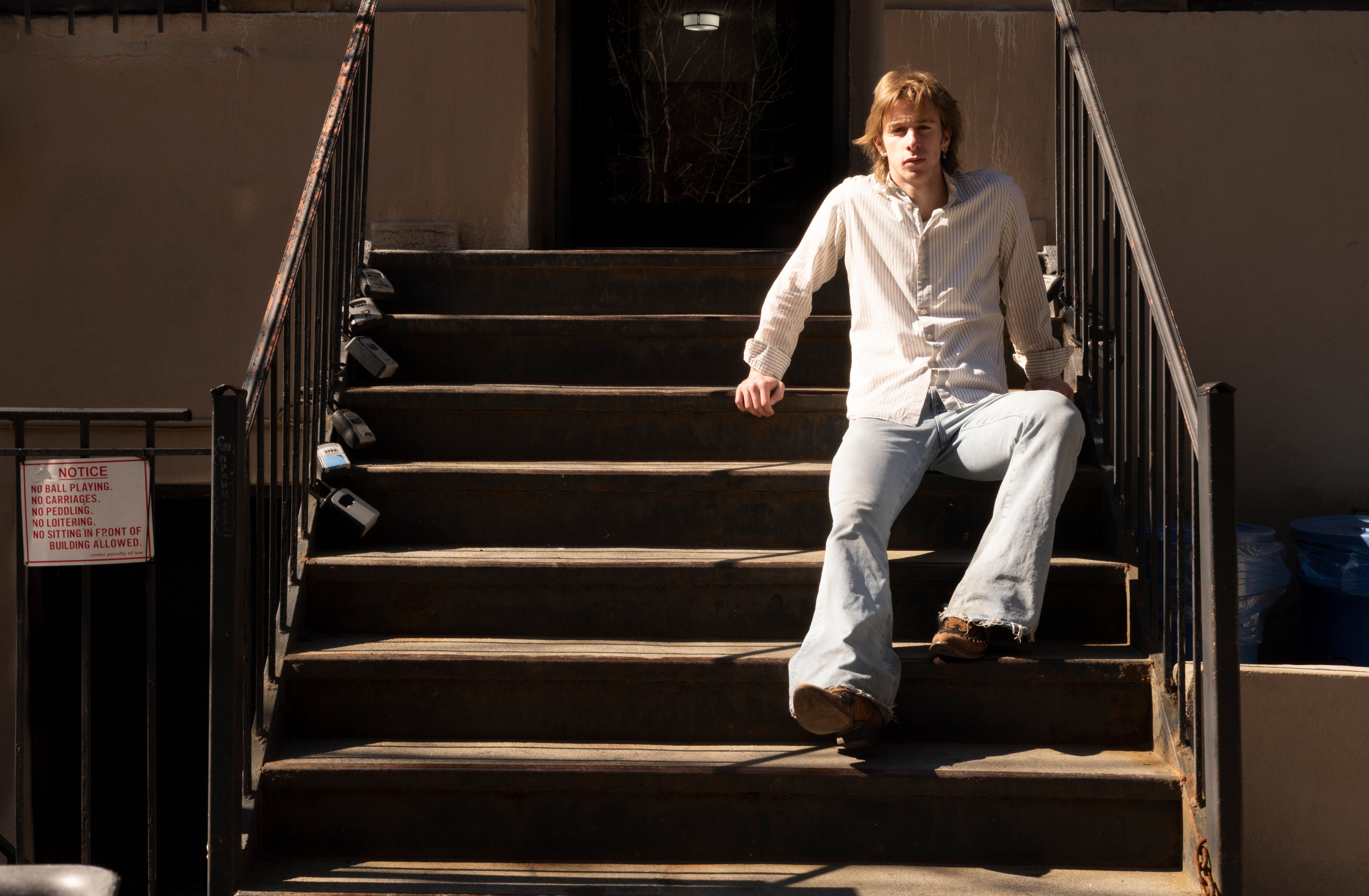
In Conversation With Josh McFashion
In Conversation With Josh McFashion
Solomon Smith
Fashion
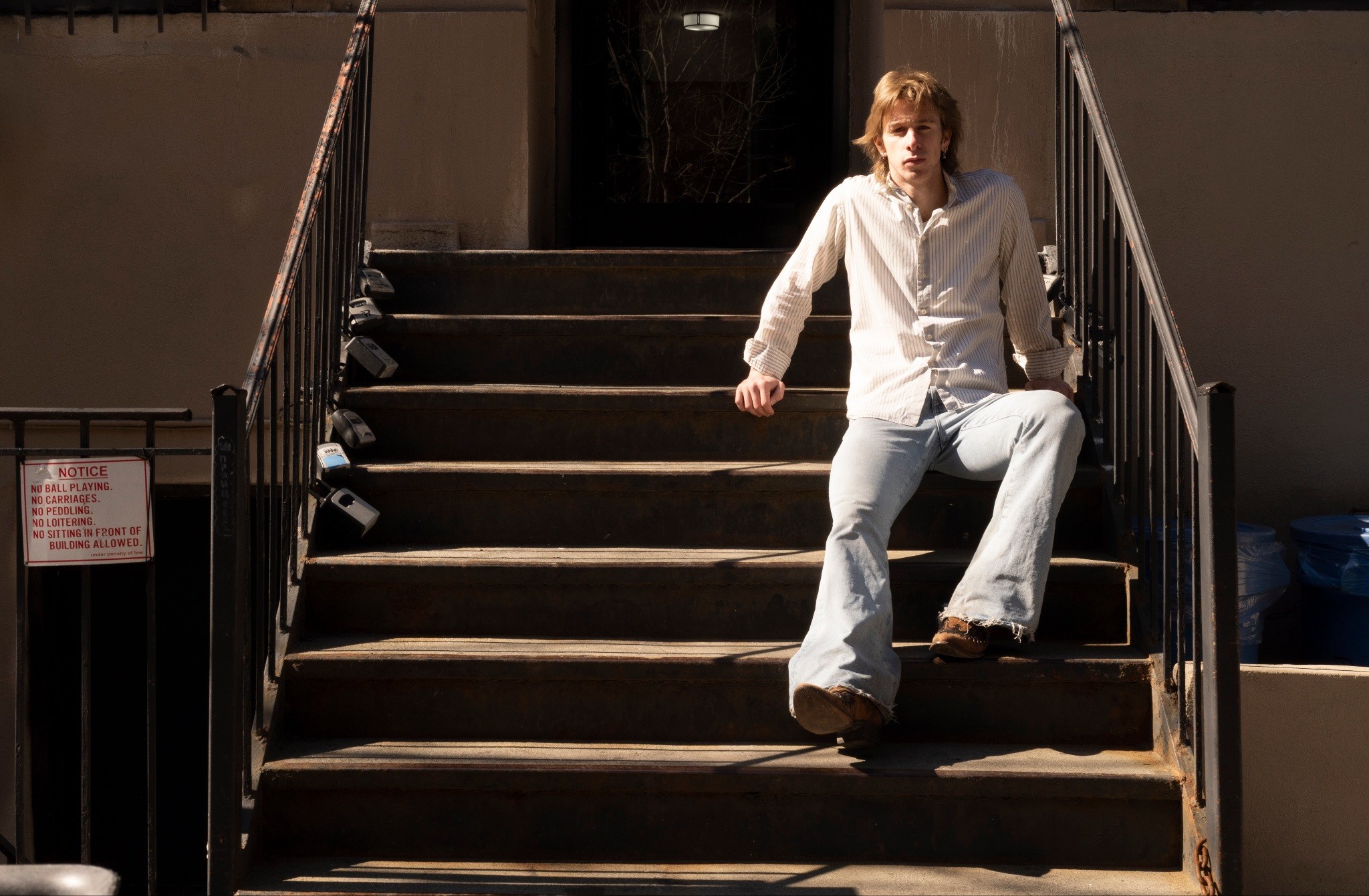
Photo Courtesy of Jackson Ortega
Solomon Smith
What's up everybody? I'm Solomon Smith and I'm speaking on behalf of Violet Workshop.
I'm here with Josh, a creative figure within NYU.
Fire photographer. I mean, one of the best in the city.
Josh McFadden
Appreciate that !
SS
And Josh, can you just start us off by just introducing yourself, what you do and how it started?
JF
Yeah, my name is Josh McFadden. Sometimes known as Josh McFashion because I have a passion for looking fly.
SS
That's fire. Josh McFashion.
JF
I go to school for business and film, but I really started dressing up towards the end of high school and it's never slowed down since then. And at one point, at the start of my sophomore year of college, which I'm still in right now, I started taking fashion photos for my roommate who's a designer, produced a fashion show for him, and we've really never looked back since.
SS
That’s dope. I know we spoke about this when I first met you, but could you go more into your upbringing—like where you came from, somewhere that’s not really known for fashion or self-expression—and how you dealt with that, and how it led to you becoming the person you are today?
JF
Yeah, so I'm from Omaha, Nebraska. Shout out.
But not really because I don't really, you know, I love that place as a place to grow up, but I don't really like that place anymore. The people there were never very accepting of fashion, of art, of culture too much. You know, you deal with the common problems you'd expect from a conservative town.
And even in my high school, I dressed up every single day. My closest friends would be my biggest haters. But even past that, like everyone didn't like the fits I was wearing. I got called gay every day.
And by the time I graduated, I got voted best dressed, most likely to be an influencer. And I moved to New York City where I can finally feel like I'm free to be who I am and have always been.
And it's funny because like back home, I never used to wear cowboy boots, even though that's like a staple there.
Because you had people driving Ford F-250s, these redneck racist white dudes wearing cowboy boots, and I didn't want to be associated with them.
But now it's rare you see me in New York City not wearing cowboy boots at least two or three times a week. It reminds me of home, the good parts, even though I associate it with the bad parts, but it's just like kind of a nostalgic thing.
And they're super fly. And I feel like it's something that I can personally relate to because, you know, everyone wears cowboy boots, but a lot of people don't have any business wearing them.
And there's nothing wrong with that.
SS
And I think you style it well.
JF
Yeah, it's just something that I feel personally attached to now more than ever.
SS
And now, speaking about the transition, was New York always somewhere you had in mind back in high school, or were you more like—you’d just go wherever felt like the best fit?
JF
Nah, man. So I read this book in fourth grade. It's about a teenager who gets arrested climbing buildings in New York City. And he has two options: go to jail or leave the country and go climb Mount Everest.
Yeah, sounds crazy to make it make sense. But ever since then, I wanted to do those two things.
I wanted to live here and I wanted to climb mountains. And I've been doing both ever since.
I guess ever since I moved here I've completed half of it.
SS
But you climb mountains as well, right ?
JF
I do. Yeah. I got my climbing shoes right here.
SS
That's fire.
JF
Yeah, then throughout middle school and all that, it felt like every single book I read, every movie I watched, every TV show I loved—all took place in New York City.
I got super into Basquiat, which is like the most cliche thing here. I didn't buy any books. One of my teachers gave me several books to read about him, gave me all these movies and documentaries to watch about him. Like it was my favorite shit I had.
And, you know, all the people at that time—like Andy Warhol and Keith Haring—really inspired me. My brother loved Keith Haring. And so I grew up kind of immersed in this like historic part of New York City and Soho in the village, which we’re walking through right now. And it seemed like especially towards the end of high school, every single piece of literature and art I was consuming just tied back to this place.
And so I just reinforced my love for wanting to come here. And every single college I applied to was in New York City. Oh, nice.
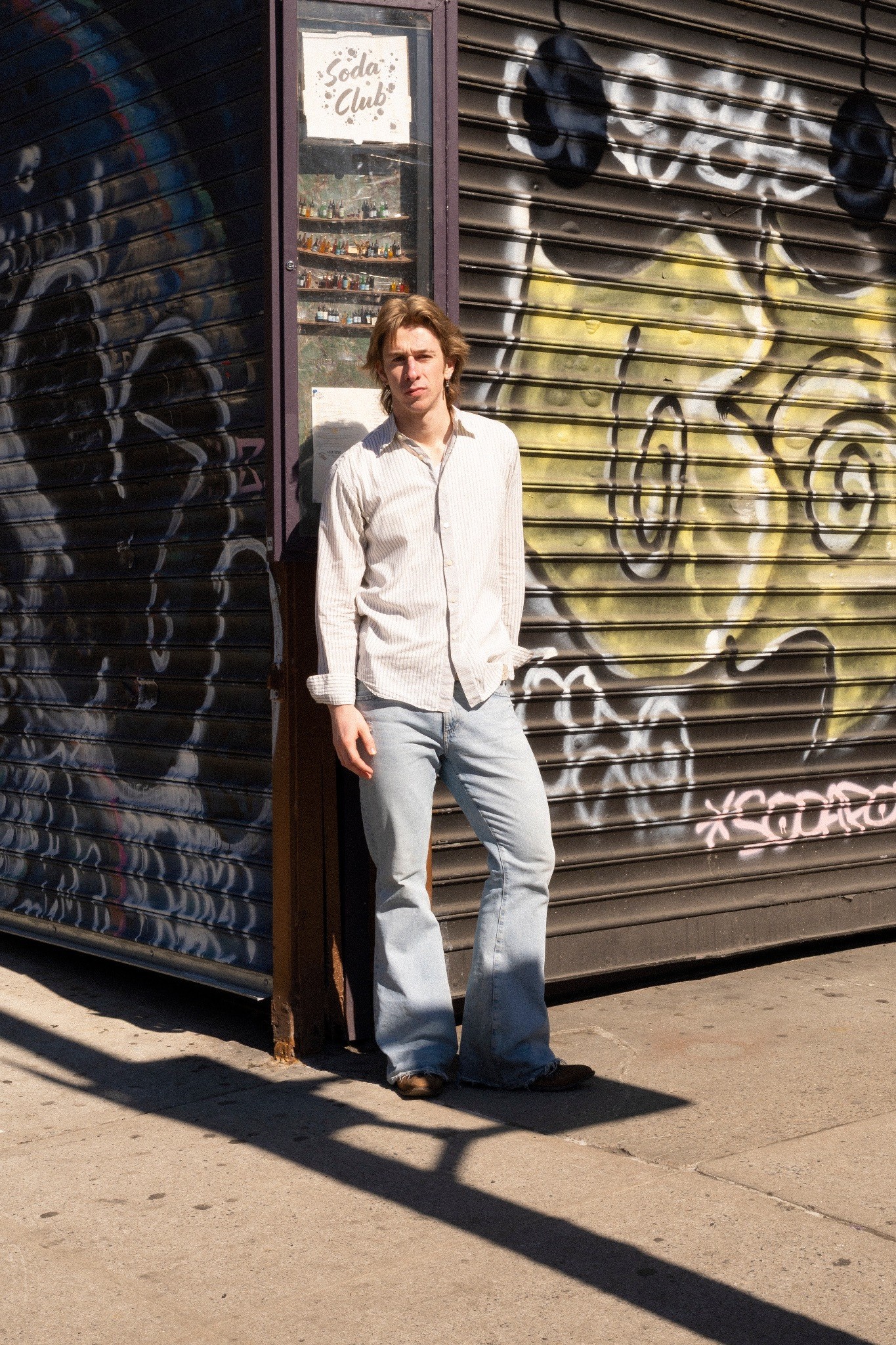
Photo Courtesy of Jackson Ortega
SS
That's fire.
So you really had the vision like you already had it down. You knew it was New York or nowhere.
JF
New York or nowhere.
SS
It's fire that you really bet on yourself, especially with everything you applied to being here. Like, there was no other option.
It was go big or go home.
JF
Go big or go home. All my friends from high school and none of them moved out of state, maybe like one or two.
And even then, like not very far.
SS
I was about to say, because I mean, from where you're from to like New York, that's a crazy transition.
JF
Yeah. Like everyone gets out of college and just moves 45 minutes away to a college town. And it seems like it's just high school 2.0, but I wanted this life.
I was gifted with the ability to move out and I wanted to take that and make the most of it.
SS
No, definitely. And now, transitioning into—well, I guess fashion has always been there—but moving into photography, what are your goals with that? And how has it kind of changed your creative process?
JF
It's interesting because like I study film, which is kind of like a subsidiary of photography and maybe the other way around.
And I feel like I have more experience with photography, even though it's not what I study.
And I almost use photography as a way to connect with people and build relationships that you wouldn’t be able to if you were just a fan of their work or something. I’ll give an example—like when I do projects that involve clothing brands, models, and influencers or whatever. You know, it’s people I’ve seen online or even just seen their artwork in person and online through word of mouth.
And it’s super cool, but sometimes when you approach people almost like a fan, you don’t get that genuine connection. You don’t really have the chance to build that connection because there’s kind of a power imbalance. But when you approach people with creative ambition and the goal to collaborate and work on something together, it changes things.
It’s so easy to connect with people and make friends through it, and that’s really what I want. The ultimate goal is to keep photography as more of a hobby, even though it’s kind of my networking tool right now. It’s something I love doing and that comes naturally to me, but I use it to build relationships that I can hopefully turn into business opportunities in the future.
It's like almost a tool because I don't get paid for any of the work I do hardly.
I mean, once in a while I'll get paid for something, but that's not the reason I do. I use it to to build my network, to make new friends that then I can go do cooler stuff with bigger stuff away from photography, even if photography is a part of it.
SS
I see what you mean. It's kind of like a really you're just investing in yourself, basically.
JF
Exactly. And I said, I mean, that's a dope way to look at it.
SS
And I think, too, especially being in the city, like it's the best place to do that.
JF
Absolutely. I mean, you can run into someone like you can run into anybody on the street and it's so unique in that way. You really can't have that anywhere else.
SS
No, nowhere.
JF
You know, if I’m out with my camera and I see somebody, anybody, I’m probably not going to—like, they’re probably not going to talk to me. But if I’m like, “Hey, you look super cool right now. You mind if I just take one photo?”
The difference between that and just approaching somebody with no intent.
SS
I see what you mean. And now with you saying that, does that mean that you always carry your camera with you or no?
JF
Quite the opposite. Quite the opposite. It is crazy because as soon as I got serious into it, I bought a bigger lens.
I get that case. I got that.
And for some reason, all my bags are tiny. You know, I love a good stylish bag.
I don't like wearing a huge bag.
Still all the time, especially when I'm going to set or something or working on projects.
I'm carrying a fat ass backpack and like two bags. You know, like whatever. So much equipment.
But I really do need to take it out with me more. I mean, I feel like one of the reasons I don't is just because like a lot of the work I do is planned out.
It really is focused on like telling a story rather than capturing candid moments, even though I do love doing that. And it seems like every time I'm out just with my camera, I end up posting more of that than the actual planned content, which is really interesting.
SS
Definitely. I mean, maybe it’s just not necessarily luck, but every time you’ve got to bring it out once in a while, because when you do, crazy stuff happens—or crazy moments that you’re able to capture.
JF
I was supposed to go grab it today. Literally, I went home to go grab my camera.
One of my friends was like, I'm coming to the park. I was like, no, I'll just do it another day.
SS
Were you going to capture something in particular today ? Or were you just trying to capture the day itself ?
JF
My friends are playing soccer.
Over by the [Washington Square Park] Arch. I always play with them.
And I just wanted to take video of them because I'm doing a project for a documentary class about like art versus sport. And that particular form of soccer is the Brazilian form called Alcinha.
JF
It's kind of a little bit of a blend, but that's a whole nother thing.
SS
Yeah. And now with you saying that are most of the projects you do tied to just things that you're interested in or is it just mainly fashion based? Well, I know you're interested in fashion, but is it fashion based or other interests that are tied to it?
JF
I think, like I said before, photography is it's it's a hobby that I love doing, but it's also a tool to do what I want to do. So that's what I've always loved fashion and I've been able to use photography to get more into that.
Like right now, I'm not wearing anything, but I actually have a ring on that I got gifted yesterday from a jewelry company because I did a photo shoot for them. It's like I love clothes, but I hate spending money on clothes.
I'm the biggest thrifter ever. I used to work at a thrift store in New York City. And that's where I got all my stuff from for the longest time. Didn't have to spend that much money.
And, you know, even if I was rich and could buy all designer or even just like one piece, that's just thousands of dollars. It will never mean as much as working with someone and then personally giving you a piece of clothing, like an accessory. And that's one of the reasons I love it, too, because it's a tool that I get to use to interact with my loves and passions.
And it's self-fulfilling. Like I get rewards like that, that may be technically tangible and material.
But it doesn't feel that way different when it's when it's gifted to you.
SS
No, definitely. And now with you saying that, like, when you hate spending money on expensive clothing, I think it says a lot about your creativity in terms of you're able to just go in a thrift store and find something that you like that might not be or no.
I feel like thrift stores have great clothes, but the fact that you don't have to rely on just designer branding in order to style yourself or like feel comfortable with what you're wearing. You could speak more to that in terms of like how you dress and what inspires you.
JF
Yeah. So this is funny because I'm actually wearing a pair of Margiela jeans.
SS
Oh, really? Oh, these are fire.
This whole fit is fire.
JF
So these Margiela jeans I got for 50 bucks at the store I worked at.
That's not Margiela prices. I would never have bought them if they were.
But I bought them, wore them, I love these pants, and I sat in paint on them on the back. So there's like paint splatters on the back a little bit, like barely.
And I was like, fuck, I just ruined a pair of designer jeans. But instead of being tweaked out, like I just painted the whole front myself. It's already Margiela-esque, the paint splatter, whatever. And I'm someone who really hates flashy designer brands.
Like there's not really tags here anywhere. There's the four stitches on the back, but you really only know that if you know.
Things like that I'm okay with. If you know, you know, then it's cool.
But like all the people out here who, you know, wear designer brands and that's all they wear. Like the Balenciaga, the Dior..I'm just not here for that because fashion started, the reason those brands were so popular and are so well known is because they started out with the fundamentals of like fit and form and certain styles. It wasn't because they slapped the brand on something and people thought the brand was cool.
They built their name up first and then it's associated with the brand. And nowadays you can't, you can't really tell the difference between the two.
Fashion people are always discussing how this fashion house fell off.
Like they haven't had good designs in the past 20 years, whatever. I'm not even here for all that because I don't really, you know, I go out there and get what I think is cool rather than worrying about like keeping up with all, with just anything.
SS
Yeah.
JF
Like this whole Hedi, Hedi Slimane trends. I love the people who wear it well, but I mean, it doesn't concern me.
SS
And now with you speaking about how you just painted your Margiela jeans, are you ever thinking about making your own clothing or designing your own clothing in some art or form?
JF
So I used to make some clothes. I've done it. I've done quite a few things.
And I moved to the city thinking like, yo, maybe one day I will have my own brand. But yeah, I kind of put that aside because it's a lot.
I mean, I live with a clothing designer now who's like, he's into it. He's the real deal.
And even just being friends with him before we live together, I kind of learned what it takes and like the kind of person you need to be.
And really how dedicated you have to be. And I just am not that person, or at least don't have that in me at this current moment.
But what I do love is, you know, working alongside someone who makes all their own designs and helping them show that to the world, you know, like definitely because you are still a part of the creative process.
It's like the construction of clothes only goes so far if no one gets to see them.
SS
Yeah.
JF
And so being able to create visuals, you know, like present those clothes in a way that emulates the beauty of the design itself is really where I find the most fun. You know, whether that's like visual ads, just talking about it, the construction of garments.
So for the time being, I mean, it's very rare that I'll like sit down and draw, drop an outfit. But I do from time to time.
Just because the reality of it, I know it's not going to get made
But it's just more for fun. It's more of a hobby.
SS
Absolutely. I get it.
JF
And, you know, sometimes I’ll draw up an outfit. And even though it’s, like in theory, made from scratch, I’ll go out and find some pieces or even just dig through my closet and find some pieces, and then alter them to be that.
Like, I love altering clothes so much—whether through visual arts like painting, drawing, whatever, stitching. This sweater I’m wearing right now has just a simple bobby pin in the back to get it to fit tighter.
Just things as simple as that, to elevate your outfit on the tiniest levels, go so much further than just spending money on something else.
I think it'll make you look good. You know, like I think the best thing you can do in fashion is know, know your body type and just know your body, what looks good on it.
And if you do that and you play that to your advantage, like everyone will compliment you. Everyone will think you have good style because that's most of it.
SS
Yeah.
JF
It's like trying to think that fashion has nothing to do with your body is kind of silly.
SS
Yeah,you know, like your body is almost part of your outfit because everything has to be proportional in a sense. No matter the body type, it just has to fit you a certain way to where one, you think it looks good.
And two, other people think, all right. Wow. He put that together.
JF
I've got thunder thighs. I'm not going to try and pull off skinny jeans.
Like I think skinny jeans look good now. They are back. They're getting brought back.
But I'm staying clear of it because I know I won't be able to pull it off. So just to have that kind of like self-awareness really helps out.
But that shouldn't discourage you because like fashion is subjective completely.
Trends come and go, but style can always stay the same.
SS
And literally, I feel like the most important part is the confidence.
I feel like you can rock a fit and if you're not truly confident within it and people can tell, it’s kind of ruined or it doesn't make the fit as good as you may have wanted it to look.
JF
Yeah. It's so funny. You ever see someone in a fit and you're like, wow, I love what he's wearing, but he could wear it so much better if you just believed in it.
SS
Yeah. Yeah. Literally.
I mean, that's, that's perfectly said because I've definitely seen that. And I'm like, eh, like, you know, it's something like, it's like each individual piece
JF
Definitely.
SS
This was an amazing interview. We just took a walk around the city basically and it was amazing.
Josh. Thank you again. Violet Workshop.
I'm out. Solomon Smith.
JF
Take care and enjoy the beautiful day.
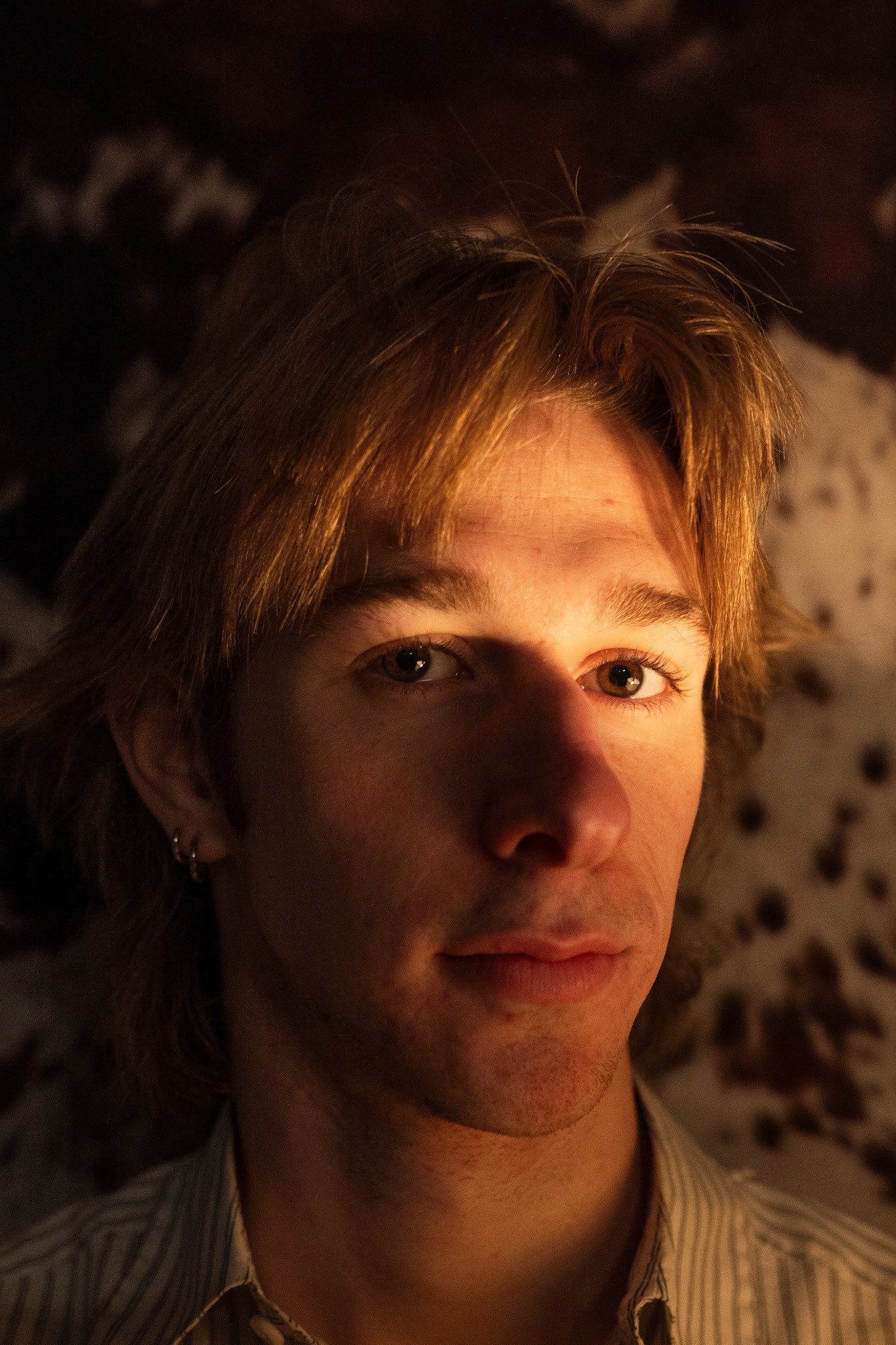
Photo Courtesy of Jackson Ortega
Photo Courtesy of Jackson Ortega
Solomon Smith
What's up everybody? I'm Solomon Smith and I'm speaking on behalf of Violet Workshop.
I'm here with Josh, a creative figure within NYU.
Fire photographer. I mean, one of the best in the city.
Josh McFadden
Appreciate that !
SS
And Josh, can you just start us off by just introducing yourself, what you do and how it started?
JF
Yeah, my name is Josh McFadden. Sometimes known as Josh McFashion because I have a passion for looking fly.
SS
That's fire. Josh McFashion.
JF
I go to school for business and film, but I really started dressing up towards the end of high school and it's never slowed down since then. And at one point, at the start of my sophomore year of college, which I'm still in right now, I started taking fashion photos for my roommate who's a designer, produced a fashion show for him, and we've really never looked back since.
SS
That’s dope. I know we spoke about this when I first met you, but could you go more into your upbringing—like where you came from, somewhere that’s not really known for fashion or self-expression—and how you dealt with that, and how it led to you becoming the person you are today?
JF
Yeah, so I'm from Omaha, Nebraska. Shout out.
But not really because I don't really, you know, I love that place as a place to grow up, but I don't really like that place anymore. The people there were never very accepting of fashion, of art, of culture too much. You know, you deal with the common problems you'd expect from a conservative town.
And even in my high school, I dressed up every single day. My closest friends would be my biggest haters. But even past that, like everyone didn't like the fits I was wearing. I got called gay every day.
And by the time I graduated, I got voted best dressed, most likely to be an influencer. And I moved to New York City where I can finally feel like I'm free to be who I am and have always been.
And it's funny because like back home, I never used to wear cowboy boots, even though that's like a staple there.
Because you had people driving Ford F-250s, these redneck racist white dudes wearing cowboy boots, and I didn't want to be associated with them.
But now it's rare you see me in New York City not wearing cowboy boots at least two or three times a week. It reminds me of home, the good parts, even though I associate it with the bad parts, but it's just like kind of a nostalgic thing.
And they're super fly. And I feel like it's something that I can personally relate to because, you know, everyone wears cowboy boots, but a lot of people don't have any business wearing them.
And there's nothing wrong with that.
SS
And I think you style it well.
JF
Yeah, it's just something that I feel personally attached to now more than ever.
SS
And now, speaking about the transition, was New York always somewhere you had in mind back in high school, or were you more like—you’d just go wherever felt like the best fit?
JF
Nah, man. So I read this book in fourth grade. It's about a teenager who gets arrested climbing buildings in New York City. And he has two options: go to jail or leave the country and go climb Mount Everest.
Yeah, sounds crazy to make it make sense. But ever since then, I wanted to do those two things.
I wanted to live here and I wanted to climb mountains. And I've been doing both ever since.
I guess ever since I moved here I've completed half of it.
SS
But you climb mountains as well, right ?
JF
I do. Yeah. I got my climbing shoes right here.
SS
That's fire.
JF
Yeah, then throughout middle school and all that, it felt like every single book I read, every movie I watched, every TV show I loved—all took place in New York City.
I got super into Basquiat, which is like the most cliche thing here. I didn't buy any books. One of my teachers gave me several books to read about him, gave me all these movies and documentaries to watch about him. Like it was my favorite shit I had.
And, you know, all the people at that time—like Andy Warhol and Keith Haring—really inspired me. My brother loved Keith Haring. And so I grew up kind of immersed in this like historic part of New York City and Soho in the village, which we’re walking through right now. And it seemed like especially towards the end of high school, every single piece of literature and art I was consuming just tied back to this place.
And so I just reinforced my love for wanting to come here. And every single college I applied to was in New York City. Oh, nice.
Photo Courtesy of Jackson Ortega
SS
That's fire.
So you really had the vision like you already had it down. You knew it was New York or nowhere.
JF
New York or nowhere.
SS
It's fire that you really bet on yourself, especially with everything you applied to being here. Like, there was no other option.
It was go big or go home.
JF
Go big or go home. All my friends from high school and none of them moved out of state, maybe like one or two.
And even then, like not very far.
SS
I was about to say, because I mean, from where you're from to like New York, that's a crazy transition.
JF
Yeah. Like everyone gets out of college and just moves 45 minutes away to a college town. And it seems like it's just high school 2.0, but I wanted this life.
I was gifted with the ability to move out and I wanted to take that and make the most of it.
SS
No, definitely. And now, transitioning into—well, I guess fashion has always been there—but moving into photography, what are your goals with that? And how has it kind of changed your creative process?
JF
It's interesting because like I study film, which is kind of like a subsidiary of photography and maybe the other way around.
And I feel like I have more experience with photography, even though it's not what I study.
And I almost use photography as a way to connect with people and build relationships that you wouldn’t be able to if you were just a fan of their work or something. I’ll give an example—like when I do projects that involve clothing brands, models, and influencers or whatever. You know, it’s people I’ve seen online or even just seen their artwork in person and online through word of mouth.
And it’s super cool, but sometimes when you approach people almost like a fan, you don’t get that genuine connection. You don’t really have the chance to build that connection because there’s kind of a power imbalance. But when you approach people with creative ambition and the goal to collaborate and work on something together, it changes things.
It’s so easy to connect with people and make friends through it, and that’s really what I want. The ultimate goal is to keep photography as more of a hobby, even though it’s kind of my networking tool right now. It’s something I love doing and that comes naturally to me, but I use it to build relationships that I can hopefully turn into business opportunities in the future.
It's like almost a tool because I don't get paid for any of the work I do hardly.
I mean, once in a while I'll get paid for something, but that's not the reason I do. I use it to to build my network, to make new friends that then I can go do cooler stuff with bigger stuff away from photography, even if photography is a part of it.
SS
I see what you mean. It's kind of like a really you're just investing in yourself, basically.
JF
Exactly. And I said, I mean, that's a dope way to look at it.
SS
And I think, too, especially being in the city, like it's the best place to do that.
JF
Absolutely. I mean, you can run into someone like you can run into anybody on the street and it's so unique in that way. You really can't have that anywhere else.
SS
No, nowhere.
JF
You know, if I’m out with my camera and I see somebody, anybody, I’m probably not going to—like, they’re probably not going to talk to me. But if I’m like, “Hey, you look super cool right now. You mind if I just take one photo?”
The difference between that and just approaching somebody with no intent.
SS
I see what you mean. And now with you saying that, does that mean that you always carry your camera with you or no?
JF
Quite the opposite. Quite the opposite. It is crazy because as soon as I got serious into it, I bought a bigger lens.
I get that case. I got that.
And for some reason, all my bags are tiny. You know, I love a good stylish bag.
I don't like wearing a huge bag.
Still all the time, especially when I'm going to set or something or working on projects.
I'm carrying a fat ass backpack and like two bags. You know, like whatever. So much equipment.
But I really do need to take it out with me more. I mean, I feel like one of the reasons I don't is just because like a lot of the work I do is planned out.
It really is focused on like telling a story rather than capturing candid moments, even though I do love doing that. And it seems like every time I'm out just with my camera, I end up posting more of that than the actual planned content, which is really interesting.
SS
Definitely. I mean, maybe it’s just not necessarily luck, but every time you’ve got to bring it out once in a while, because when you do, crazy stuff happens—or crazy moments that you’re able to capture.
JF
I was supposed to go grab it today. Literally, I went home to go grab my camera.
One of my friends was like, I'm coming to the park. I was like, no, I'll just do it another day.
SS
Were you going to capture something in particular today ? Or were you just trying to capture the day itself ?
JF
My friends are playing soccer.
Over by the [Washington Square Park] Arch. I always play with them.
And I just wanted to take video of them because I'm doing a project for a documentary class about like art versus sport. And that particular form of soccer is the Brazilian form called Alcinha.
JF
It's kind of a little bit of a blend, but that's a whole nother thing.
SS
Yeah. And now with you saying that are most of the projects you do tied to just things that you're interested in or is it just mainly fashion based? Well, I know you're interested in fashion, but is it fashion based or other interests that are tied to it?
JF
I think, like I said before, photography is it's it's a hobby that I love doing, but it's also a tool to do what I want to do. So that's what I've always loved fashion and I've been able to use photography to get more into that.
Like right now, I'm not wearing anything, but I actually have a ring on that I got gifted yesterday from a jewelry company because I did a photo shoot for them. It's like I love clothes, but I hate spending money on clothes.
I'm the biggest thrifter ever. I used to work at a thrift store in New York City. And that's where I got all my stuff from for the longest time. Didn't have to spend that much money.
And, you know, even if I was rich and could buy all designer or even just like one piece, that's just thousands of dollars. It will never mean as much as working with someone and then personally giving you a piece of clothing, like an accessory. And that's one of the reasons I love it, too, because it's a tool that I get to use to interact with my loves and passions.
And it's self-fulfilling. Like I get rewards like that, that may be technically tangible and material.
But it doesn't feel that way different when it's when it's gifted to you.
SS
No, definitely. And now with you saying that, like, when you hate spending money on expensive clothing, I think it says a lot about your creativity in terms of you're able to just go in a thrift store and find something that you like that might not be or no.
I feel like thrift stores have great clothes, but the fact that you don't have to rely on just designer branding in order to style yourself or like feel comfortable with what you're wearing. You could speak more to that in terms of like how you dress and what inspires you.
JF
Yeah. So this is funny because I'm actually wearing a pair of Margiela jeans.
SS
Oh, really? Oh, these are fire.
This whole fit is fire.
JF
So these Margiela jeans I got for 50 bucks at the store I worked at.
That's not Margiela prices. I would never have bought them if they were.
But I bought them, wore them, I love these pants, and I sat in paint on them on the back. So there's like paint splatters on the back a little bit, like barely.
And I was like, fuck, I just ruined a pair of designer jeans. But instead of being tweaked out, like I just painted the whole front myself. It's already Margiela-esque, the paint splatter, whatever. And I'm someone who really hates flashy designer brands.
Like there's not really tags here anywhere. There's the four stitches on the back, but you really only know that if you know.
Things like that I'm okay with. If you know, you know, then it's cool.
But like all the people out here who, you know, wear designer brands and that's all they wear. Like the Balenciaga, the Dior..I'm just not here for that because fashion started, the reason those brands were so popular and are so well known is because they started out with the fundamentals of like fit and form and certain styles. It wasn't because they slapped the brand on something and people thought the brand was cool.
They built their name up first and then it's associated with the brand. And nowadays you can't, you can't really tell the difference between the two.
Fashion people are always discussing how this fashion house fell off.
Like they haven't had good designs in the past 20 years, whatever. I'm not even here for all that because I don't really, you know, I go out there and get what I think is cool rather than worrying about like keeping up with all, with just anything.
SS
Yeah.
JF
Like this whole Hedi, Hedi Slimane trends. I love the people who wear it well, but I mean, it doesn't concern me.
SS
And now with you speaking about how you just painted your Margiela jeans, are you ever thinking about making your own clothing or designing your own clothing in some art or form?
JF
So I used to make some clothes. I've done it. I've done quite a few things.
And I moved to the city thinking like, yo, maybe one day I will have my own brand. But yeah, I kind of put that aside because it's a lot.
I mean, I live with a clothing designer now who's like, he's into it. He's the real deal.
And even just being friends with him before we live together, I kind of learned what it takes and like the kind of person you need to be.
And really how dedicated you have to be. And I just am not that person, or at least don't have that in me at this current moment.
But what I do love is, you know, working alongside someone who makes all their own designs and helping them show that to the world, you know, like definitely because you are still a part of the creative process.
It's like the construction of clothes only goes so far if no one gets to see them.
SS
Yeah.
JF
And so being able to create visuals, you know, like present those clothes in a way that emulates the beauty of the design itself is really where I find the most fun. You know, whether that's like visual ads, just talking about it, the construction of garments.
So for the time being, I mean, it's very rare that I'll like sit down and draw, drop an outfit. But I do from time to time.
Just because the reality of it, I know it's not going to get made
But it's just more for fun. It's more of a hobby.
SS
Absolutely. I get it.
JF
And, you know, sometimes I’ll draw up an outfit. And even though it’s, like in theory, made from scratch, I’ll go out and find some pieces or even just dig through my closet and find some pieces, and then alter them to be that.
Like, I love altering clothes so much—whether through visual arts like painting, drawing, whatever, stitching. This sweater I’m wearing right now has just a simple bobby pin in the back to get it to fit tighter.
Just things as simple as that, to elevate your outfit on the tiniest levels, go so much further than just spending money on something else.
I think it'll make you look good. You know, like I think the best thing you can do in fashion is know, know your body type and just know your body, what looks good on it.
And if you do that and you play that to your advantage, like everyone will compliment you. Everyone will think you have good style because that's most of it.
SS
Yeah.
JF
It's like trying to think that fashion has nothing to do with your body is kind of silly.
SS
Yeah,you know, like your body is almost part of your outfit because everything has to be proportional in a sense. No matter the body type, it just has to fit you a certain way to where one, you think it looks good.
And two, other people think, all right. Wow. He put that together.
JF
I've got thunder thighs. I'm not going to try and pull off skinny jeans.
Like I think skinny jeans look good now. They are back. They're getting brought back.
But I'm staying clear of it because I know I won't be able to pull it off. So just to have that kind of like self-awareness really helps out.
But that shouldn't discourage you because like fashion is subjective completely.
Trends come and go, but style can always stay the same.
SS
And literally, I feel like the most important part is the confidence.
I feel like you can rock a fit and if you're not truly confident within it and people can tell, it’s kind of ruined or it doesn't make the fit as good as you may have wanted it to look.
JF
Yeah. It's so funny. You ever see someone in a fit and you're like, wow, I love what he's wearing, but he could wear it so much better if you just believed in it.
SS
Yeah. Yeah. Literally.
I mean, that's, that's perfectly said because I've definitely seen that. And I'm like, eh, like, you know, it's something like, it's like each individual piece
JF
Definitely.
SS
This was an amazing interview. We just took a walk around the city basically and it was amazing.
Josh. Thank you again. Violet Workshop.
I'm out. Solomon Smith.
JF
Take care and enjoy the beautiful day.
Photo Courtesy of Jackson Ortega