Fashion in Contrast, Uniting for Reinvention or Illusion?
Fashion in Contrast, Uniting for Reinvention or Illusion?
Francesca Nicoletti
Fashion
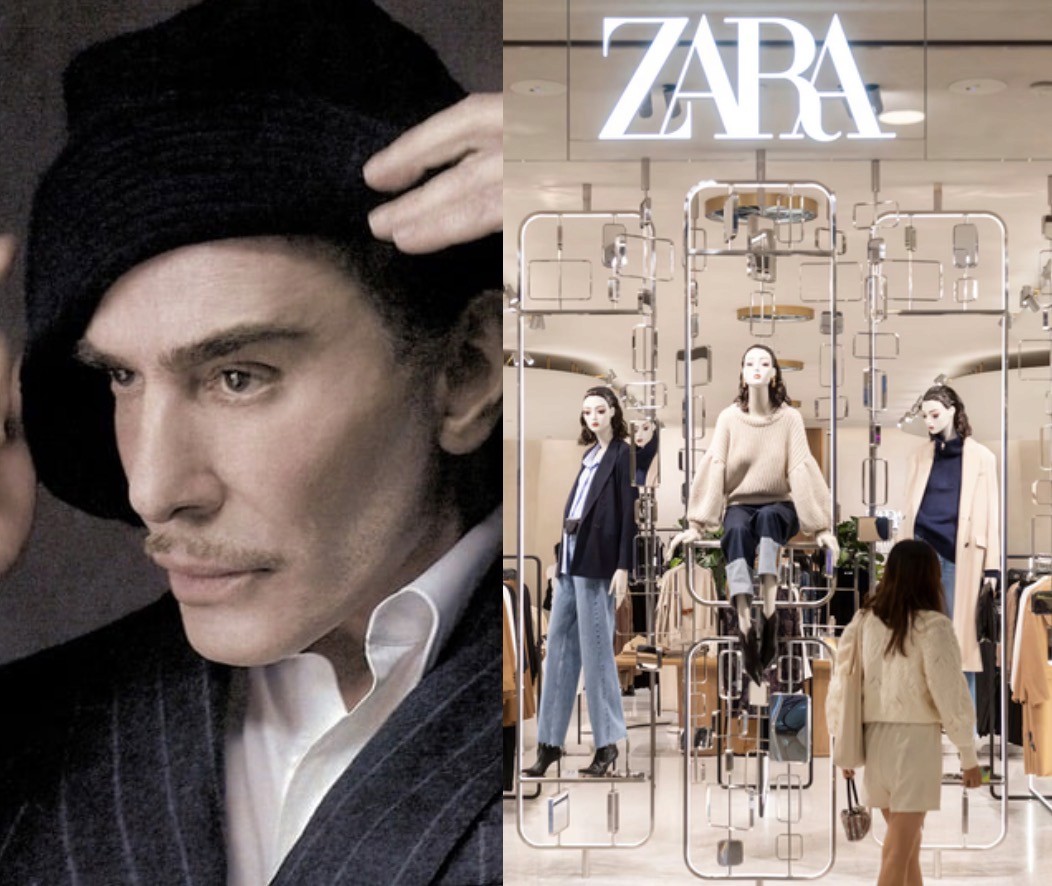
At first glance, a collaboration between John Galliano and Zara sounds less like a partnership and more like a contradiction. One represents the height of couture craftsmanship, the other the speed and scale of global retail. Yet this unlikely pairing may be one of the most telling indicators of where fashion is heading.
Galliano has entered a two-year partnership with Zara in an effort to rework and revive the brand’s archives. He plans to deconstruct and reconstruct archival Zara garments, transforming them into new, “sustainable” collections using haute couture techniques. The collaboration has already sparked widespread conversation, raising questions about whether Zara is attempting to meaningfully confront its long-criticized production model or simply repackage it through the language of couture. At the same time, this marks Galliano’s return to the atelier following a two-year absence after his final collection with Maison Margiela in 2024, a return that feels both unexpected and strategically timed.
Galliano’s design language is rooted in romance, theatricality, and excess, creating garments that function as both clothing and narrative. Throughout his career, he has blurred the line between fashion and performance, constructing entire worlds rather than simply producing collections. At Christian Dior, he reimagined classic silhouettes with dramatic intensity. At Maison Margiela, he developed deeply artisanal, emotionally layered work. At Givenchy, he revitalized couture through spectacle. His work resists immediacy and demands time, attention, and interpretation.
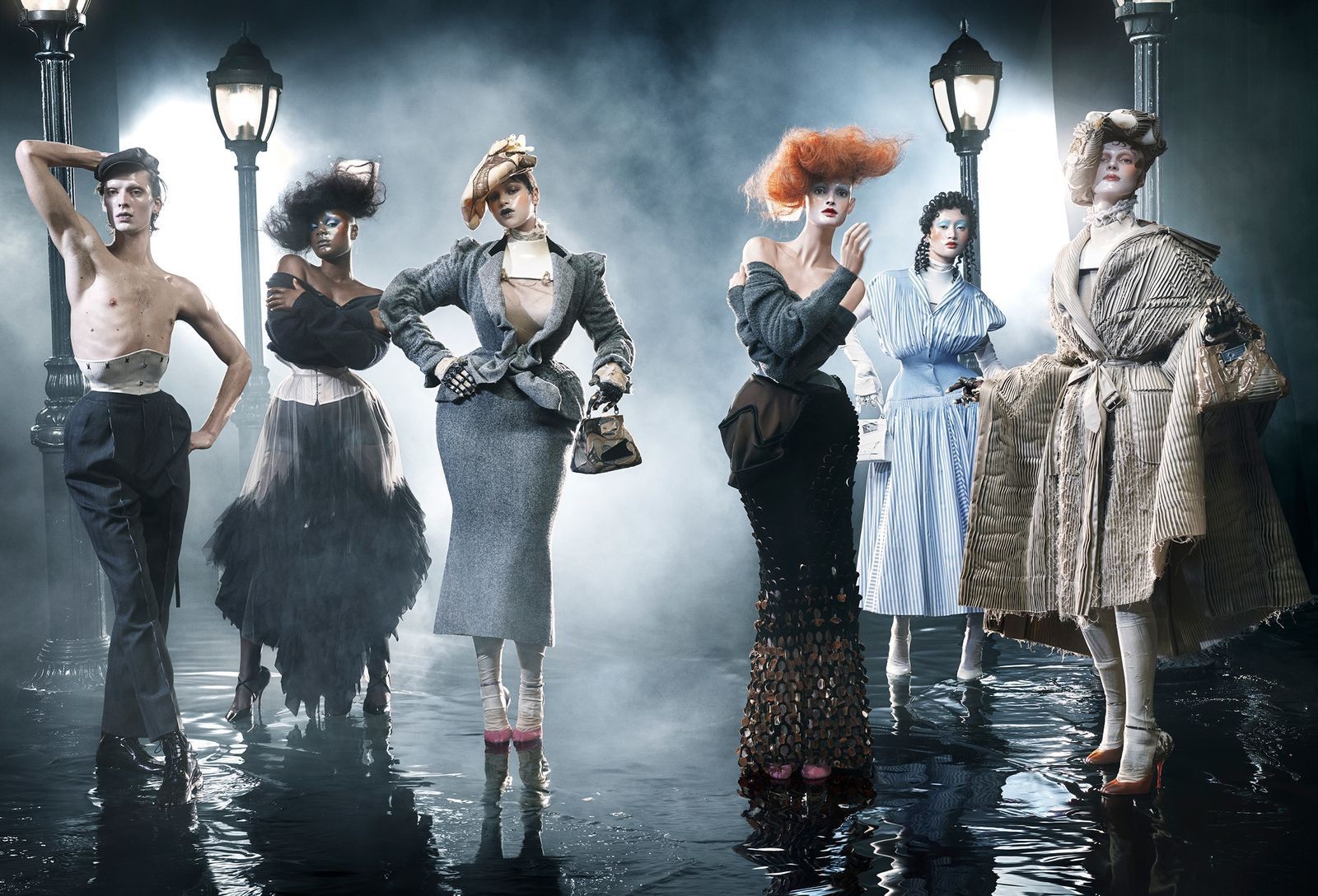
Galliano’s Artisanal Collection for Margiela; April 2024
For decades, this approach has thrived within the rarefied space of haute couture, where imagination outweighs practicality and garments serve as vessels for storytelling. Zara, by contrast, built its empire on speed, accessibility, and an acute ability to translate runway ideas into everyday wear. Where Galliano constructs meaning over months, Zara compresses it into weeks. Where couture privileges process, Zara prioritizes output. The union of these two forces feels inherently paradoxical, yet undeniably reflective of the current state of fashion.
The tension between slow luxury and fast fashion has long been framed as a clash of values, craftsmanship versus convenience, process versus product, longevity versus disposability. Slow luxury, the world Galliano inhabits, is defined by time and precision. It requires research, draping, revision, and refinement. At houses like Maison Margiela, garments are not simply produced; they are developed, often layered with historical references, technical complexity, and emotional depth. Their value lies not only in the final piece, but in the labor and intention embedded within it.
Zara operates on the opposite principle, compression. The brand has perfected the art of collapsing the design timeline, producing and distributing collections at a pace that mirrors digital culture. Its success is not rooted in depth, but in responsiveness. Rather than shaping culture over time, Zara reflects it instantly, offering consumers an accessible version of what is already circulating on runways and social media. It is a system built not on permanence, but on constant renewal.
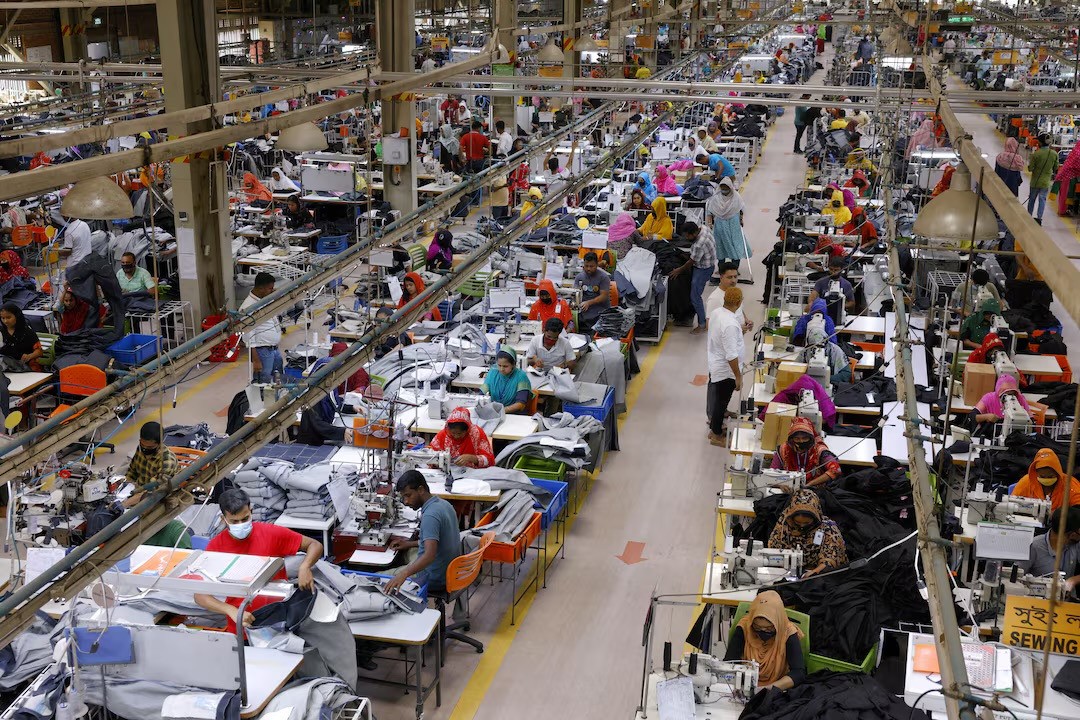
Zara’s Use of Factories for Mass Clothing Production
So when these two systems converge, the question is not simply whether they can coexist. It is what may be lost in the process, and what might be redefined.
On the surface, the collaboration is framed through the lens of sustainability. The idea of deconstructing archival garments and reworking them into new pieces suggests a move toward circular fashion, a corrective gesture within an industry increasingly criticized for waste and overproduction. Yet the scale of Zara’s global output complicates this narrative. Upcycling a limited number of archival garments, no matter how conceptually rich, cannot offset a business model built on volume. The risk is that sustainability becomes aesthetic rather than structural, a visual language applied to garments without fundamentally altering the system that produces them.
At the same time, the collaboration functions as a powerful marketing strategy. By aligning itself with Galliano, Zara gains access to a form of cultural and creative legitimacy traditionally reserved for luxury fashion houses. Galliano’s name carries weight. It signals artistry, heritage, and craftsmanship. In this context, he becomes more than a designer. He becomes a narrative device through which Zara can reposition itself. The partnership introduces elements of scarcity and exclusivity, qualities typically absent from fast fashion, potentially transforming how consumers perceive the brand. What Zara produces may not fundamentally change, but how it is understood might.
In the traditional fashion hierarchy, haute couture sits firmly at the top as the most time-intensive, exclusive, and expensive form of garment creation. Fast fashion, conversely, occupies the base, defined by mass production and rapid consumption. This collaboration suggests that these boundaries are no longer fixed, but increasingly porous. Luxury designers are entering mass retail spaces more openly, translating elements of couture into more accessible formats of runway fashion.
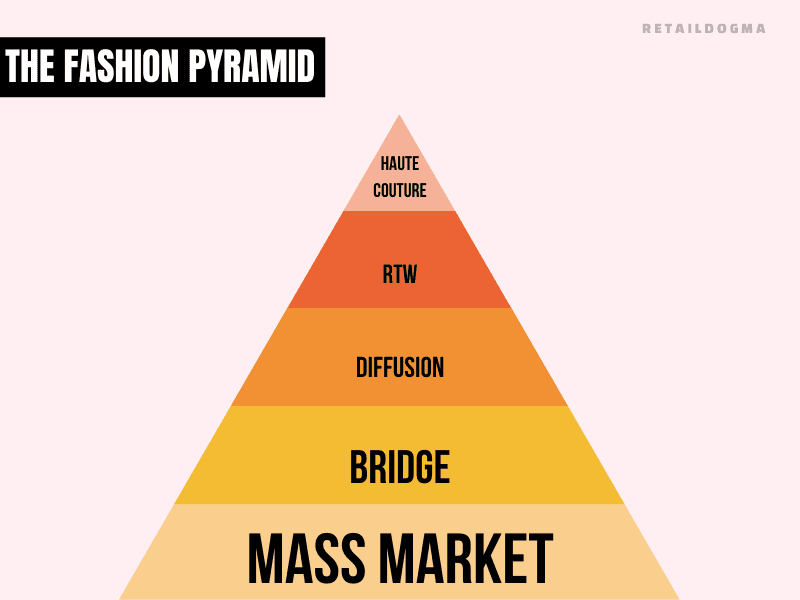
The Hierarchy of Fashion
Yet this shift raises a more complex question. What happens to couture when it becomes translatable? Galliano’s reconstruction of archival Zara garments may be framed as innovation or even democratization, but it also risks diluting the mystique that has long defined haute couture. Couture has historically relied on its inaccessibility as a marker of value. If its techniques, aesthetics, or conceptual frameworks become widely accessible, does that value begin to decrease?
As consumers grow more conscious of sustainability and more critical of overproduction, brands are under increasing pressure to adapt, not only in practice, but in perception. Partnerships like this can also suggest that the future of fashion may lie not in the opposition between luxury and fast fashion, but in their convergence. A hybrid model may emerge, one that borrows the language of craftsmanship while maintaining the infrastructure of mass production.
Whether this represents genuine progress or a more sophisticated form of branding remains unclear. Galliano’s return through Zara is not just a creative decision. It is a cultural and systematic one. It signals a moment in which the boundaries between exclusivity and accessibility, artistry and commerce, are no longer stable, but proactively evolving in line with broader shifts across the fashion industry.
And perhaps that is the most significant outcome of this collaboration. It does not resolve the tension between slow luxury and fast fashion, it intensifies it. In doing so, it forces the industry, and its consumers, to confront a more difficult question. Not whether these systems can coexist, but whether, in merging them, fashion risks losing the very distinctions that once defined it.
At first glance, a collaboration between John Galliano and Zara sounds less like a partnership and more like a contradiction. One represents the height of couture craftsmanship, the other the speed and scale of global retail. Yet this unlikely pairing may be one of the most telling indicators of where fashion is heading.
Galliano has entered a two-year partnership with Zara in an effort to rework and revive the brand’s archives. He plans to deconstruct and reconstruct archival Zara garments, transforming them into new, “sustainable” collections using haute couture techniques. The collaboration has already sparked widespread conversation, raising questions about whether Zara is attempting to meaningfully confront its long-criticized production model or simply repackage it through the language of couture. At the same time, this marks Galliano’s return to the atelier following a two-year absence after his final collection with Maison Margiela in 2024, a return that feels both unexpected and strategically timed.
Galliano’s design language is rooted in romance, theatricality, and excess, creating garments that function as both clothing and narrative. Throughout his career, he has blurred the line between fashion and performance, constructing entire worlds rather than simply producing collections. At Christian Dior, he reimagined classic silhouettes with dramatic intensity. At Maison Margiela, he developed deeply artisanal, emotionally layered work. At Givenchy, he revitalized couture through spectacle. His work resists immediacy and demands time, attention, and interpretation.
Galliano’s Artisanal Collection for Margiela; April 2024
For decades, this approach has thrived within the rarefied space of haute couture, where imagination outweighs practicality and garments serve as vessels for storytelling. Zara, by contrast, built its empire on speed, accessibility, and an acute ability to translate runway ideas into everyday wear. Where Galliano constructs meaning over months, Zara compresses it into weeks. Where couture privileges process, Zara prioritizes output. The union of these two forces feels inherently paradoxical, yet undeniably reflective of the current state of fashion.
The tension between slow luxury and fast fashion has long been framed as a clash of values, craftsmanship versus convenience, process versus product, longevity versus disposability. Slow luxury, the world Galliano inhabits, is defined by time and precision. It requires research, draping, revision, and refinement. At houses like Maison Margiela, garments are not simply produced; they are developed, often layered with historical references, technical complexity, and emotional depth. Their value lies not only in the final piece, but in the labor and intention embedded within it.
Zara operates on the opposite principle, compression. The brand has perfected the art of collapsing the design timeline, producing and distributing collections at a pace that mirrors digital culture. Its success is not rooted in depth, but in responsiveness. Rather than shaping culture over time, Zara reflects it instantly, offering consumers an accessible version of what is already circulating on runways and social media. It is a system built not on permanence, but on constant renewal.
Zara’s Use of Factories for Mass Clothing Production
So when these two systems converge, the question is not simply whether they can coexist. It is what may be lost in the process, and what might be redefined.
On the surface, the collaboration is framed through the lens of sustainability. The idea of deconstructing archival garments and reworking them into new pieces suggests a move toward circular fashion, a corrective gesture within an industry increasingly criticized for waste and overproduction. Yet the scale of Zara’s global output complicates this narrative. Upcycling a limited number of archival garments, no matter how conceptually rich, cannot offset a business model built on volume. The risk is that sustainability becomes aesthetic rather than structural, a visual language applied to garments without fundamentally altering the system that produces them.
At the same time, the collaboration functions as a powerful marketing strategy. By aligning itself with Galliano, Zara gains access to a form of cultural and creative legitimacy traditionally reserved for luxury fashion houses. Galliano’s name carries weight. It signals artistry, heritage, and craftsmanship. In this context, he becomes more than a designer. He becomes a narrative device through which Zara can reposition itself. The partnership introduces elements of scarcity and exclusivity, qualities typically absent from fast fashion, potentially transforming how consumers perceive the brand. What Zara produces may not fundamentally change, but how it is understood might.
In the traditional fashion hierarchy, haute couture sits firmly at the top as the most time-intensive, exclusive, and expensive form of garment creation. Fast fashion, conversely, occupies the base, defined by mass production and rapid consumption. This collaboration suggests that these boundaries are no longer fixed, but increasingly porous. Luxury designers are entering mass retail spaces more openly, translating elements of couture into more accessible formats of runway fashion.
The Hierarchy of Fashion
Yet this shift raises a more complex question. What happens to couture when it becomes translatable? Galliano’s reconstruction of archival Zara garments may be framed as innovation or even democratization, but it also risks diluting the mystique that has long defined haute couture. Couture has historically relied on its inaccessibility as a marker of value. If its techniques, aesthetics, or conceptual frameworks become widely accessible, does that value begin to decrease?
As consumers grow more conscious of sustainability and more critical of overproduction, brands are under increasing pressure to adapt, not only in practice, but in perception. Partnerships like this can also suggest that the future of fashion may lie not in the opposition between luxury and fast fashion, but in their convergence. A hybrid model may emerge, one that borrows the language of craftsmanship while maintaining the infrastructure of mass production.
Whether this represents genuine progress or a more sophisticated form of branding remains unclear. Galliano’s return through Zara is not just a creative decision. It is a cultural and systematic one. It signals a moment in which the boundaries between exclusivity and accessibility, artistry and commerce, are no longer stable, but proactively evolving in line with broader shifts across the fashion industry.
And perhaps that is the most significant outcome of this collaboration. It does not resolve the tension between slow luxury and fast fashion, it intensifies it. In doing so, it forces the industry, and its consumers, to confront a more difficult question. Not whether these systems can coexist, but whether, in merging them, fashion risks losing the very distinctions that once defined it.