Interviewed by Christian Harley
What was your earliest memory of music feeling bigger than just something to listen to?
Okay, so I think when I was small, I was just basically like a baby wanting to be a pop star. So I took piano lessons and singing lessons and guitar lessons, and I was just trying to boost my—just my artist side. But then starting to get into university, and seeing what I actually want to do, and a more, of course, secure role within the industry, I was actually starting to think about the business side of the industry. And then with the possibility of moving to New York, I was like, okay, that’s now the best way to explore.
So basically, before arriving here—I got here in September—I started looking up on Handshake and whatever websites to see if there were any positions open within a record label which I could apply to. Honestly, I saw LLC4 and just, like, very, very randomly applied—like, you know when you send in like 500 resumes everywhere. And it was actually after the first two interviews that I realized that LLC4 was part of Universal and that I was actually gonna get my foot in the door within the industry. And that’s one of the things that I’m most proud of—the fact that just applying, applying, applying, and once I got here, I basically got the internship. So I started off strong. I was very proud of that.
But that was, like, so recently, and I’ve been actually thinking about the fact that it’s not just an idea or a dream or saying, like, “yeah, I want to do music.” Like, I actually am. So now I’m taking it more seriously and everything.
So you mentioned briefly you’re originally from Italy. What part of your upbringing there shaped the way you see music and creativity today?
That’s a good question. So I think music in Italy—it started a lot with opera. Okay, so I did the children’s choir in an opera house, and also the classical training with piano and stuff like that. But then I soon realized that that was maybe not exactly my genre.
So Italian music is very—I love going from old Italian music, singer-songwriters, they’re amazing, and then going now to the current more trapper vibe that the Italian scene is bringing up. I really like Italian music a lot, and I feel like it’s really trained my ear, because it’s so vast. There are so many parts of Italian music, like I said—opera, pop, trap, whatever—and it just has such a big culture.
I feel like growing up in an environment in which I shifted genres, but was always in the music environment, training my ear so much. And now that’s, I think, one of the reasons I was able to learn how to DJ, because of the trained ear. You know, when you feel the music you listen to, the music you grow up with—it’s kind of inevitable that you feel it inside of you whenever you run. So I think that was very good because of the differentiation in the music, definitely.
Shifting gears a little bit, going into your work in project management—what interested you specifically about that field?
So basically, I’ve always been into management, and I thought that project management would give me a technical skill. So focusing also on information systems, not just event management, and just learning how to organize. Because I feel that’s more something that you either are born with or you learn how to multitask and learn over time, but it’s not something that I believe you have to go to school to learn how to do. Management is so personal, I believe.
So I decided to go into project management because I believe that gave me at least a little bit more on the tech side. Although I don’t see myself in a tech company, the future is hopefully long, so you never know. Maybe I do the music business for a while, and then I go into a tech startup or whatever.
What’s something you’ve learned in the industry that’s changed the way you listen to music?
So I feel like now I’m looking for differentiation, because that’s the basic thing that an A&R looks for. If you have a similar sound to someone and you’re too common, they’re not gonna pick you. They’re not gonna take you. You have to have something that makes them say, “Okay, I recognize that artist”—something in the voice, in the song, in the way they write, in the lyrics, whatever. You have to have something that makes you unique.
And I feel like now when I listen to music, I try to find that in the artists I listen to. So yeah, that’s it.
Every label has its own culture. How would you describe the energy at LLC4, where you’re currently interning, and how has it shaped the way you approach your own creative path?
So it’s extremely chill. It’s so amazing. It’s so open. You can go into the office dressed as you want, and show yourself as who you are. There are no dress codes, limitations, or censorships. It’s just a very open environment. And I feel like it helps a lot when you’re new to a place to have an open environment.
The only thing is that being in such an open environment and such an open role, you have to kind of take your own lead. You don’t have someone telling you, “Okay, this is how we do things.” Basically, you have to see what you’re worth, what you can add to the company, and just do it—without thinking, “Oh, I have to follow these guidelines,” or “Oh, I have to check in if this is how you do it.” Of course, you don’t want to step on anyone’s toes, but it’s such a free environment that you really have to shape your own path and your own way.
They’re very open to listening to everything, and that’s why it’s so creative. But initially, it can be a bit confusing because you’re like, “Okay, what am I supposed to do?” You’re given tasks, but you have to find your role within the company. And that’s one of the hardest things about such an open environment—having to find your own reason for being there on your own.
Speaking on that, what’s one responsibility or project at LLC4 that made you feel like, “Okay, I’m really doing industry work now”?
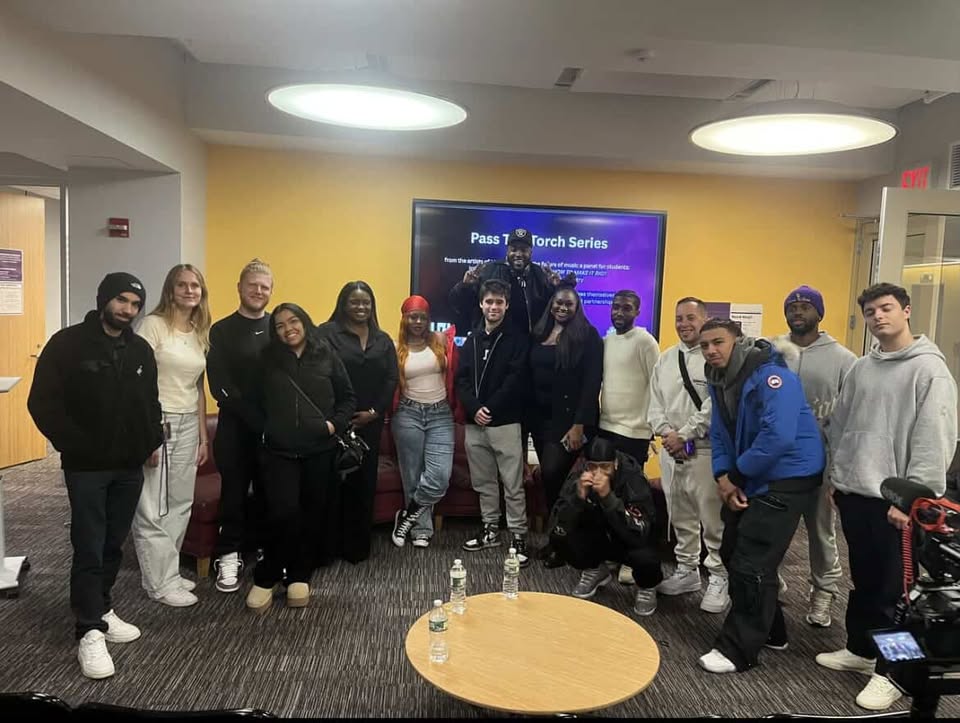
Probably brand partnerships and working on the NYU event. Because nobody told me to organize an event or do this—I just saw a chance and was like, “Okay, let me try to organize this event and see how it goes.”
Organizing an event comes with reaching out to artists, reaching out to sponsors and people who want to contribute to the event or project, organizing schedules, attendance lists, guest lists, and having guests enter NYU. All of that, plus the insecurity and fear of organizing your first event—I felt a lot of pressure because I was like, “Okay, this is the first time I’m doing something that hasn’t been assigned to me.” It was just something I wanted to do.
Shifting gears again, how does the music scene in Italy differ from the New York music scene, and which do you prefer?
I don’t know if I have a preference. I think it’s very different. The ear is very different—what Americans listen to versus what Italians listen to. The preferences are different. I see a lot of American artists who go crazy in the U.S. but don’t have that strong of a position in Italy, because Italians like listening to Italian music—Italian lyrics.
Of course, international and American music is everywhere, and I’m not saying nobody listens to it. I’m just saying that Italian music prevails.
Okay, so as a DJ, what sorts of music are you listening to these days? Who do you think is dope right now?
I really like Fred Again. That’s a very basic answer [laughs]. And then definitely Charli XCX.
How has it been trying to navigate the DJ scene here in New York?
Yeah, I feel like in Italy it was easier, because I had this bar where I played for a year. That’s basically how I started—just walking into a bar and saying, “Hey, I’m a DJ.” They didn’t really do that before I walked in, and then we put the whole thing together and started a Friday night thing, which was very successful.
In New York, it’s been more challenging. I’ve been doing it for a year, and you need a little more experience, I guess. What I’ve been doing is trying out bigger controllers to learn how to DJ on those, because basically every bar has one. When I’m ready—maybe in the spring—I’ll go to bars and say, “Okay, I have my USB, I have my stuff, I just need your controller and I can DJ the night.”
I’ve also been making contact with other DJs. Every time I go somewhere, I talk to the DJ, and I’ve built up contacts that way.
But yeah, I’m taking my time. Don’t rush it, because you build your reputation fast, and you don’t want a bad one. I’m learning how to mix on bigger controllers, and I really like to improvise during shows because it’s more motivating to play. So yeah, I really want to learn how to mix well.
Okay, before we wrap up, what’s heavy in your rotation right now on Spotify [laughs]?
Oh my God [laughs]. I don’t have Spotify—I use Apple Music. Definitely Jeremy Zucker, that’s for the softies because he’s a very chill artist. I also really enjoy Tate McRae and Ross Lynch.
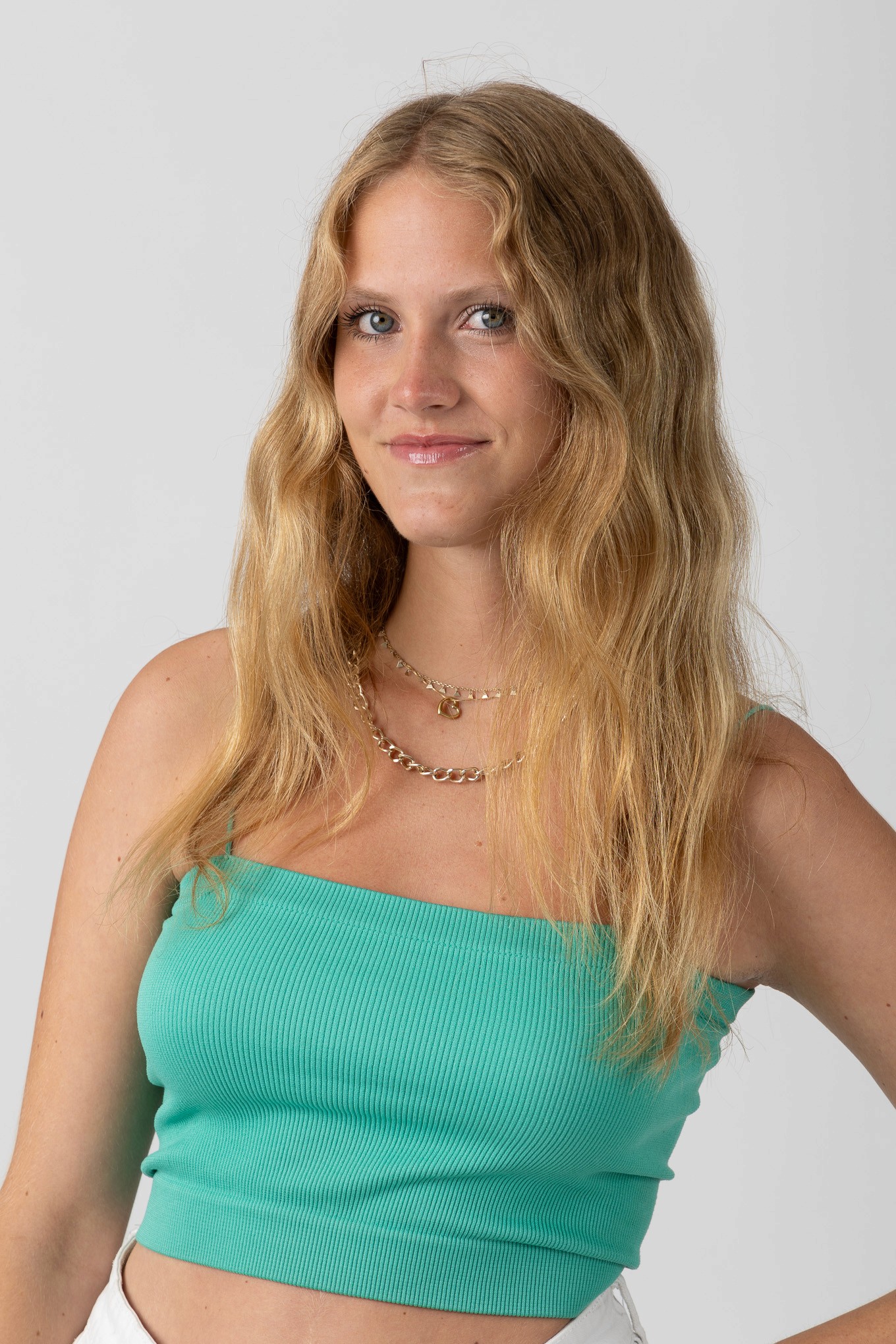
Anik grew up in a trilingual household, born to a German mother and an American father, and was raised in Florence, Italy. In September 2025, she moved to New York City to pursue a STEM-designated Master’s degree in Project Management at NYU. Shortly after arriving, she began working at LLC4, a record label under Universal Music Studios, marking her entry into the business side of the music industry.